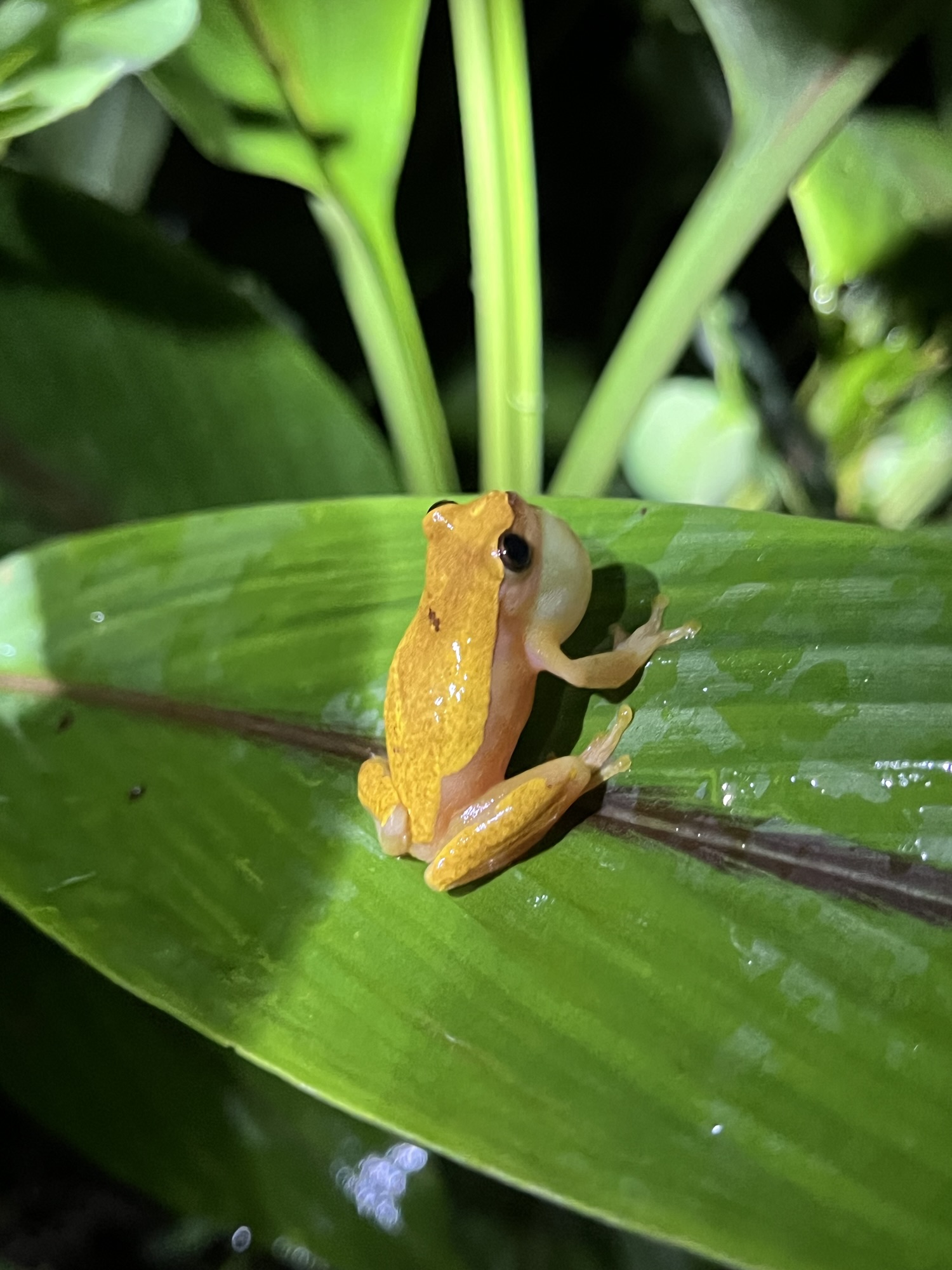
Have you ever heard someone call a dolphin and watch it actually appear? Have you ever been dazzled by the lighting from the moon and stars on a fully open sky?
All trips leave us with stories. Some you tell in passing, others you carry like treasures. My trip to the Amazon rainforest in January 2024 gave me stories I know I’ll hold forever, stories of connection, wisdom, and a kind of beauty that words can only begin to capture.
A sunset safari like no other
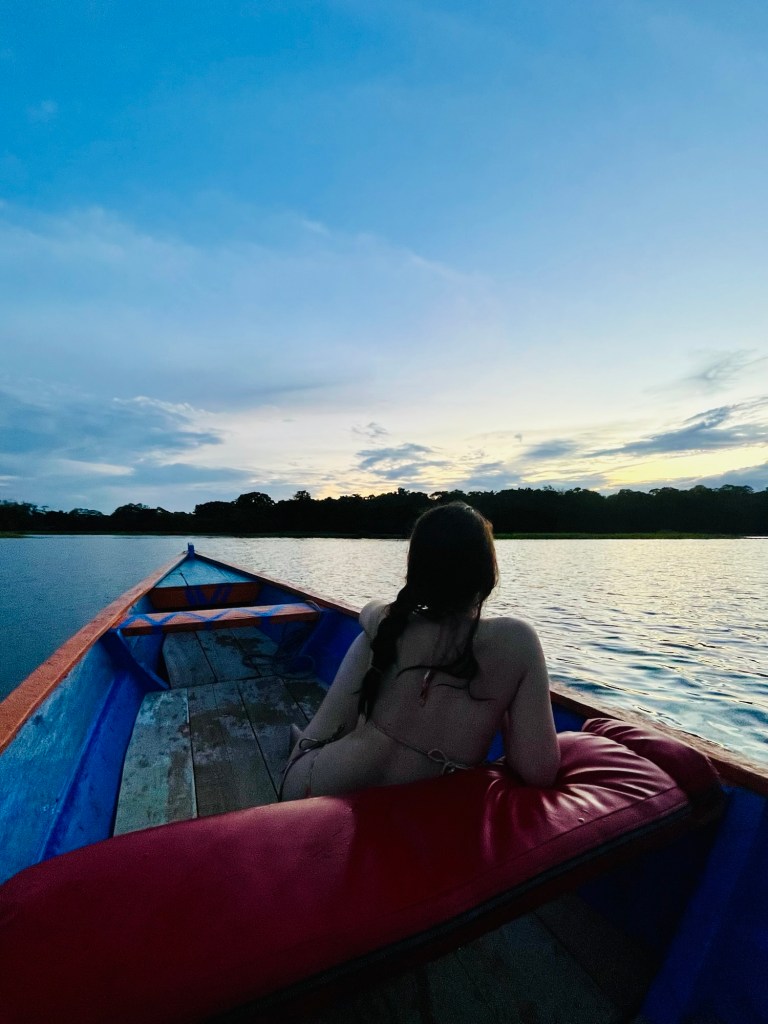
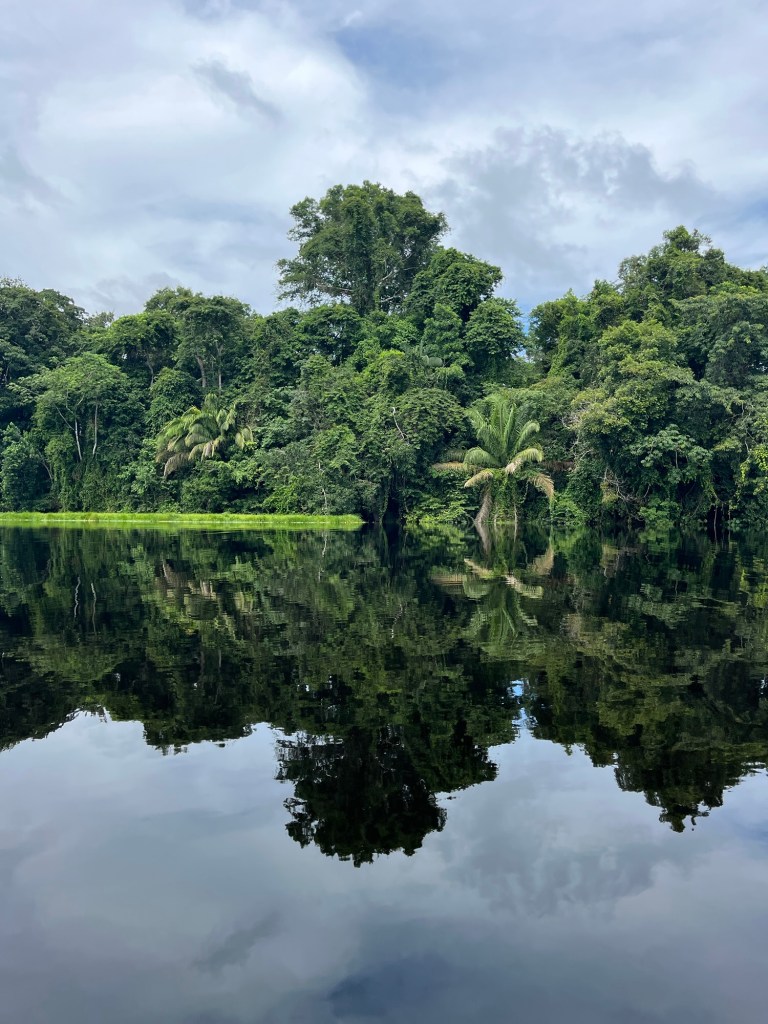
I didn’t know it yet, but that night on Lake Yahuacaca would give me one of the most unforgettable experiences of my life. My partner and I had boarded a rustic boat with a local guide, a man in his late 50s or 60s, whose mind seemed to hold the entire rainforest. He knew every plant, every bird, every hidden medicine. And then he claimed he could call the pink dolphins.
I thought, “Okay, let’s see.” He cupped his hands to his mouth and released a strange, raw sound. For a moment, nothing. Then the water stirred about 20 meters away. A pink dolphin surfaced, circling our boat as if answering a call from a friend. I was speechless. The guide whispered that the dolphin was upset because he usually brought food but hadn’t that week and therefore it was all very quick and he disappeared into the water in the blink of an eye. It was a magical brief moment. The fact that he had called it at all, that he held a language with nature we’ve long forgotten, left me in awe.
With him was his 15‑year‑old grandson, there as his assistant. Most people roll their eyes at teenagers, but this boy was different: humble, dedicated, eyes shining with dreams. He told us he studied tourism and worked afternoons and weekends because he wanted to be a guide like his grandfather. No arrogance, just curiosity and gratitude. Watching them together felt like witnessing the Amazon’s future.
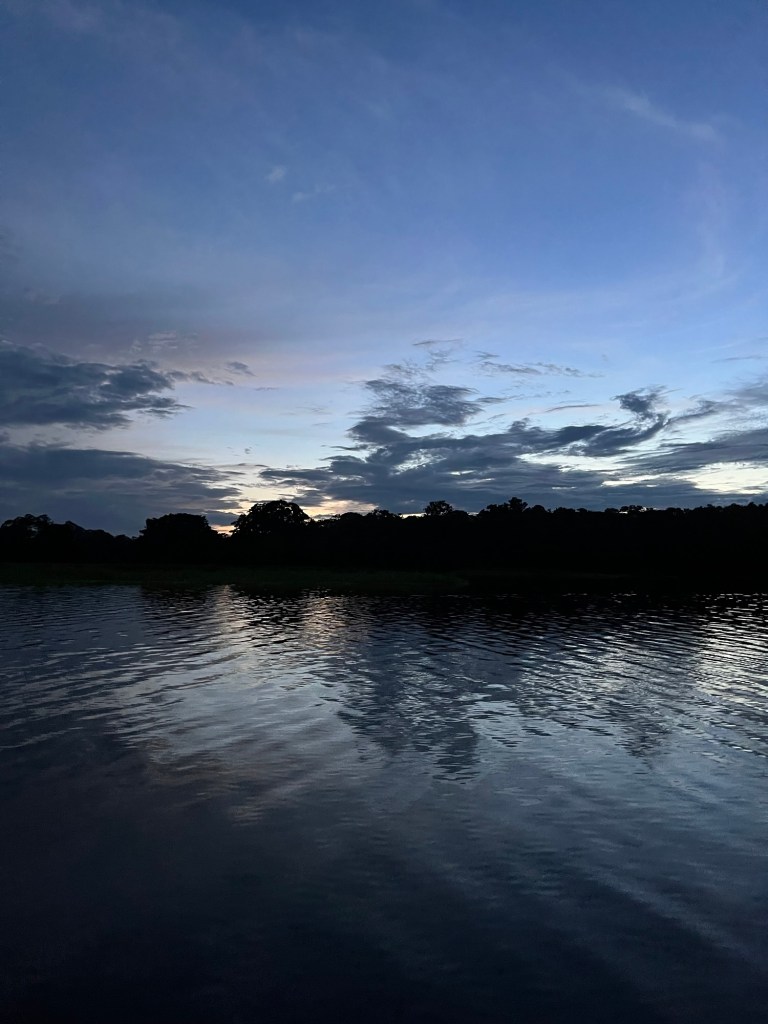
Just before night fell, our guide encouraged us to take a swim in the Amazon River itself. We had brought swimsuits, though we weren’t sure we’d actually use them, but the temptation was too strong. The water was refreshingly cool, wrapping around us like silk. I didn’t stay more than five minutes, I’ll admit, as my mind kept flashing images of crocodiles lurking below. But those short minutes were unforgettable. To say “I swam in the Amazon River” still gives me goosebumps.
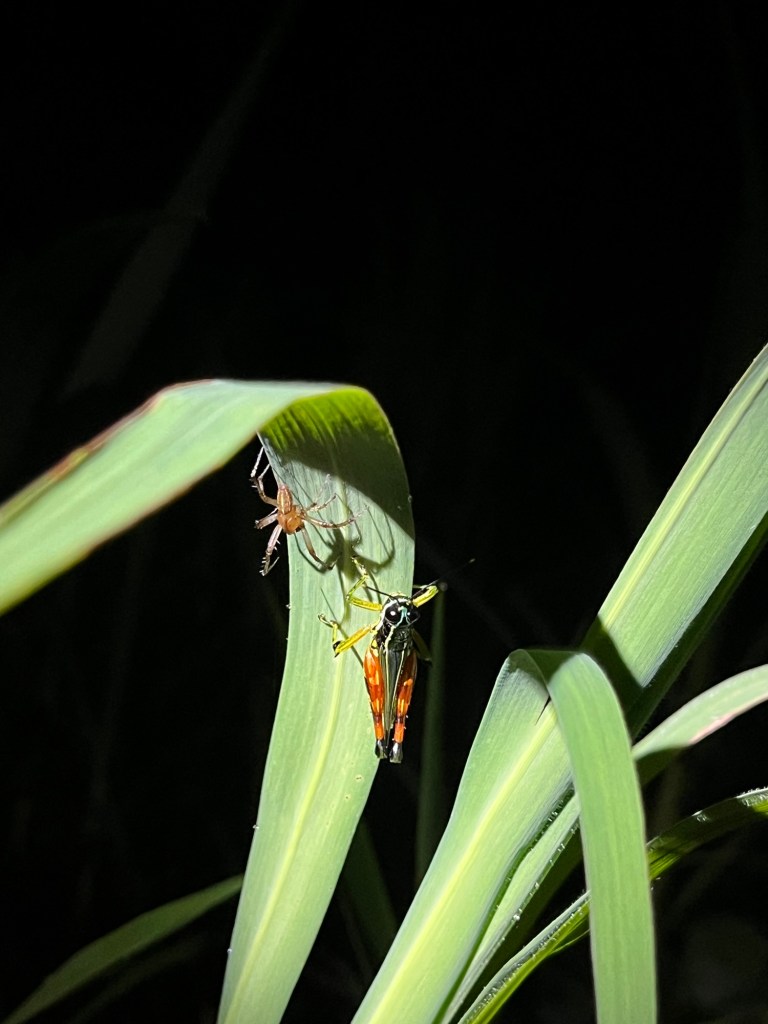
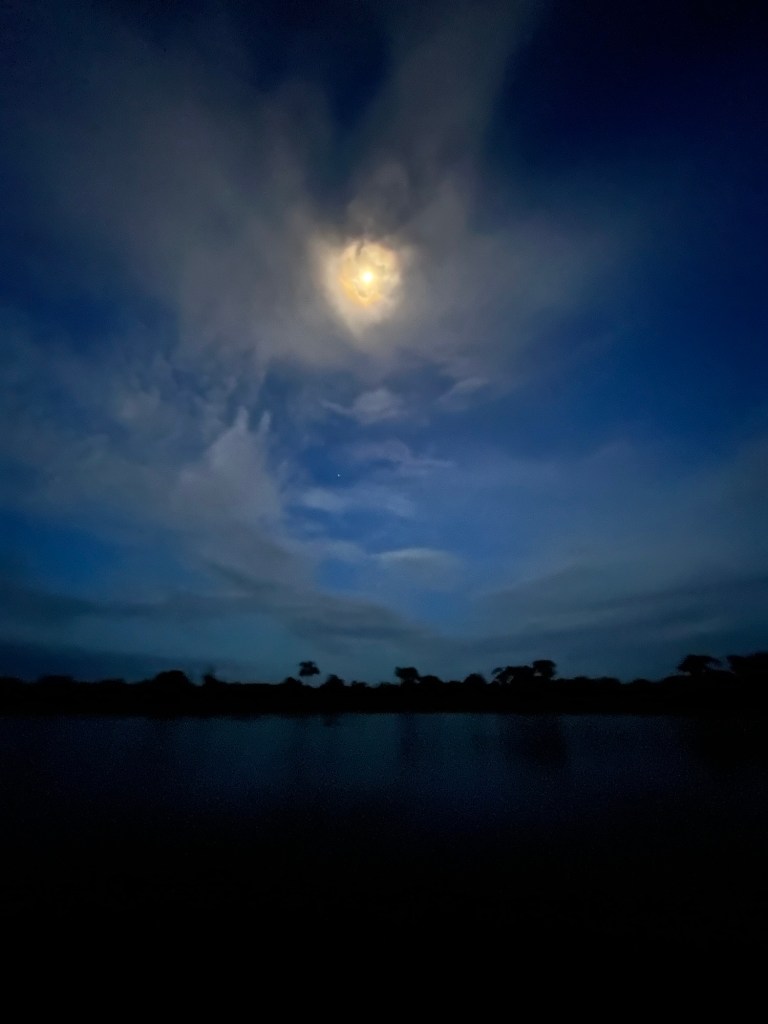
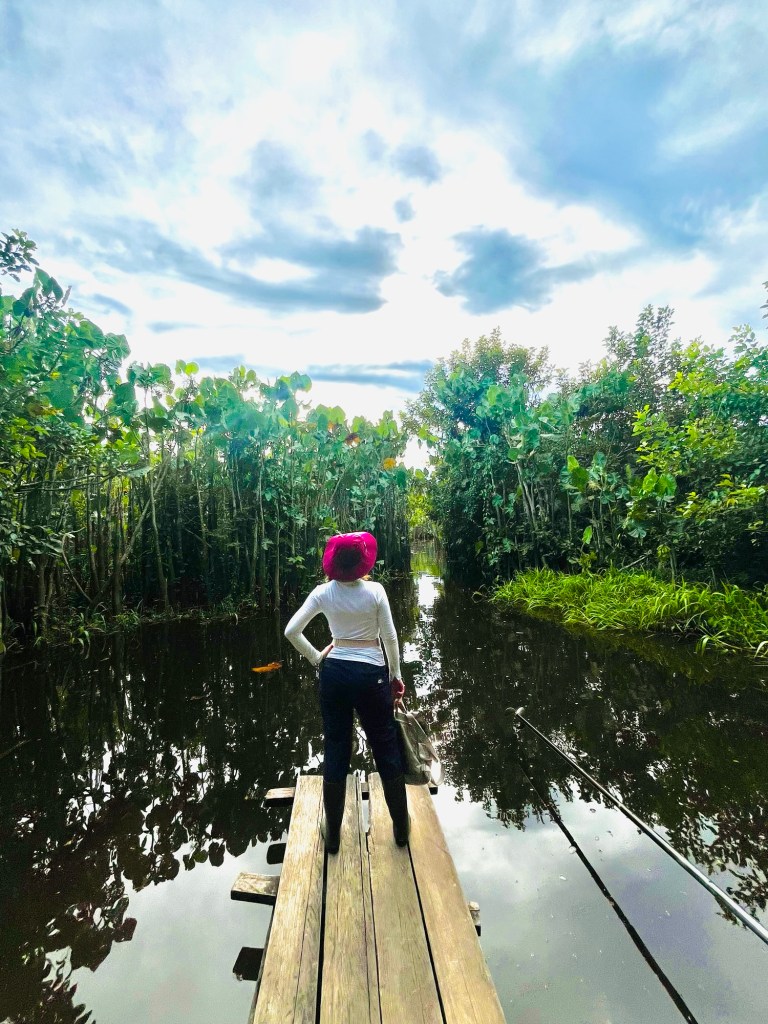
After the sun dipped, our guide gave us cushions and told us to lie back. The boat drifted silently among the mangroves. Above us, a sky overflowing with stars; around us, the jungle alive with birds, bats, insects, and creatures unseen, a chorus so loud it felt like the forest was singing opera. We didn’t speak. We didn’t need to. That hour was the closest I’ve ever felt to nature’s heartbeat.
Awakening with birdsong
Another morning we rose at 4:30 a.m. for birdwatching. Armed with a checklist, we spotted over fifty species in just an hour right there in Leticia. The diversity was simply astonishing.
Did you know that Colombia is home to nearly 2,000 bird species, more than any other country on Earth? That’s nearly 20% of the world’s birds, packed into one nation, and it makes it a birdwatcher’s paradise. At the same time, Colombia ranks as the second most biodiverse country on the planet, just behind Brazil.
Later that day, at Parque Mundo Amazónico, we explored an immense number of medicinal plants the locals use almost every day. Some, they told us, had even helped them cure and protect themselves during the Covid‑19 pandemic.
The weather was hot and humid, and I was suddenly struck with a brutal headache. I thought it would ruin the day. But our young guide, who was 26 years old, simply bent down, picked a plant from the path, brewed it into a quick tea, and handed it to me. I drank it, and within minutes, the pain was completely gone. I never learned its name for certain, but it may have been Tayuya, a rainforest vine known to relieve headaches and inflammation, or perhaps Ankhu’si, a medicinal nettle used by the Kofan people. Whatever it was, it worked and fast.


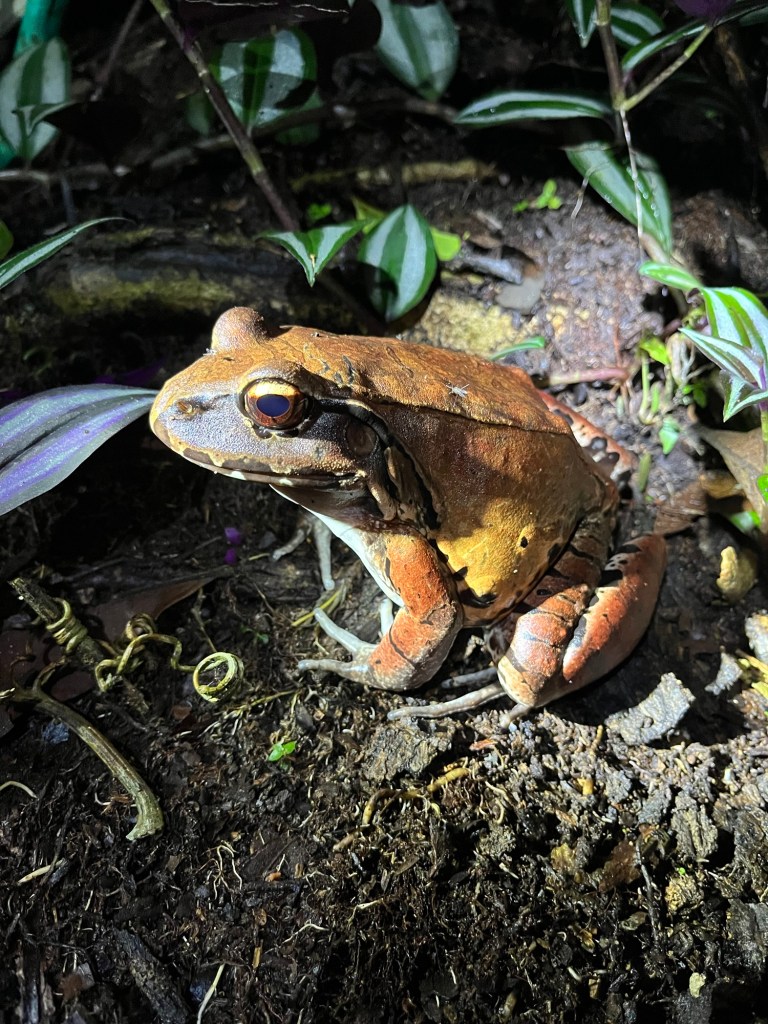
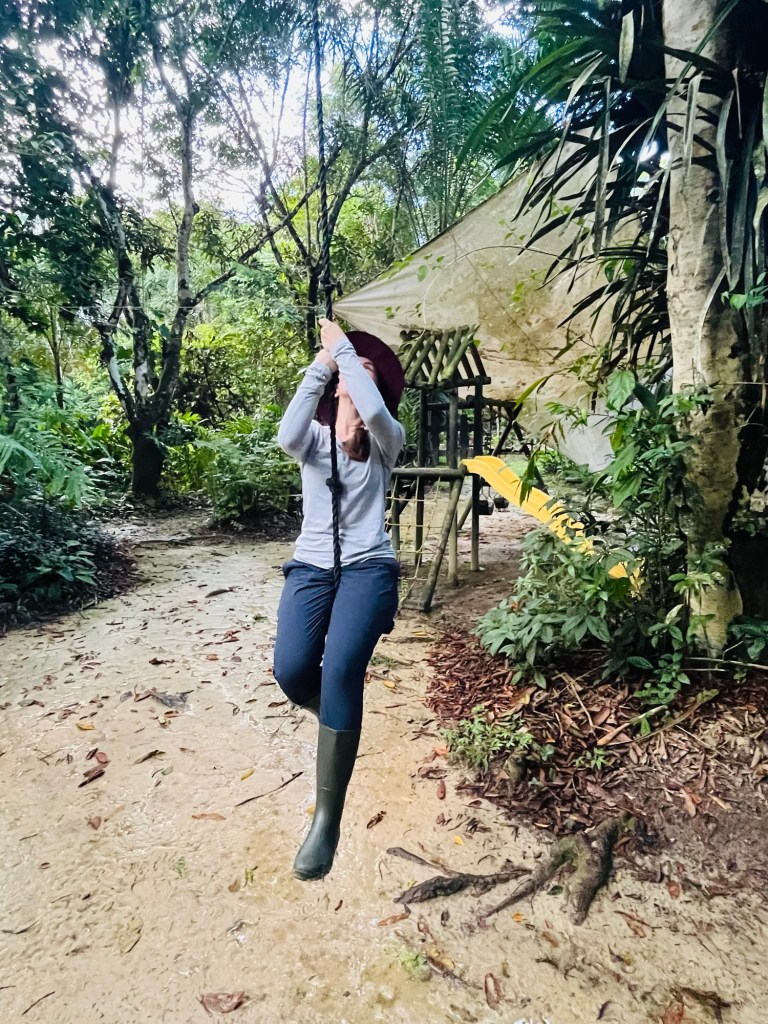
Back home, I’d have reached for a pill without thinking. Here, the forest itself had healed me. That moment was a revelation. These guides learn the same subjects we do: math, geography, history, but they also inherit ancestral wisdom we’ve lost. Knowledge that keeps them calm, present, and in harmony with their world. I didn’t feel jealous so much as humbled, reminded of how disconnected we’ve become.
On Pelazón & Mojojoys
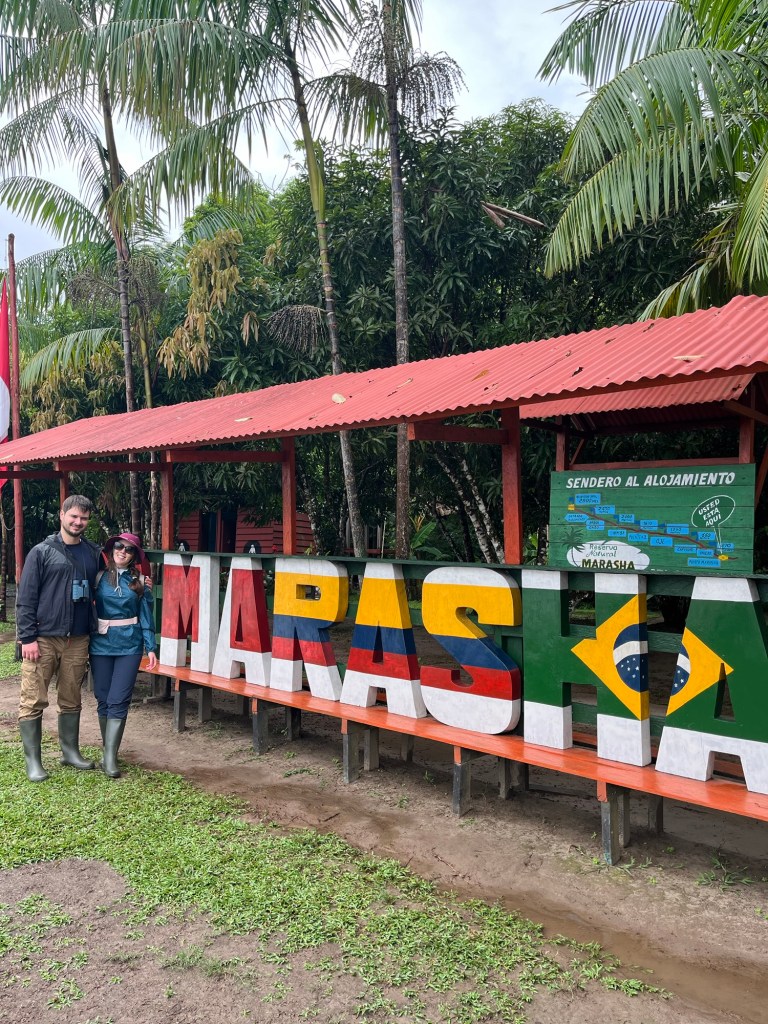
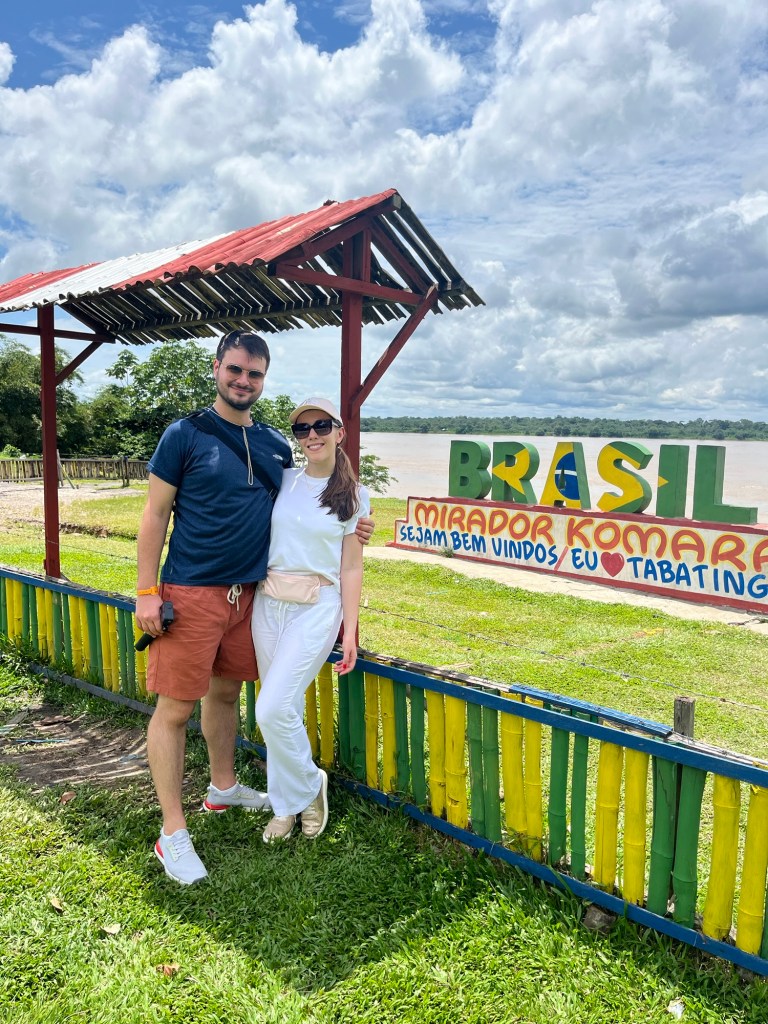
Our journey took us beyond Colombia into Peru and Brazil. In the Marasha Natural Reserve of Peru, we learned about the Tikuna Pelazón ritual. At a girl’s first menstruation, she is kept in isolation for months, taught songs, weaving, and the wisdom of her people. The ritual ends with her head shaved, once even by pulling the hair by hand, her body painted black, and the community welcoming her as a woman.
Hearing it left me conflicted. The symbolism was powerful, but the practice itself felt harsh. It was a reminder that cultures hold deep wisdom, but not all traditions age with grace.
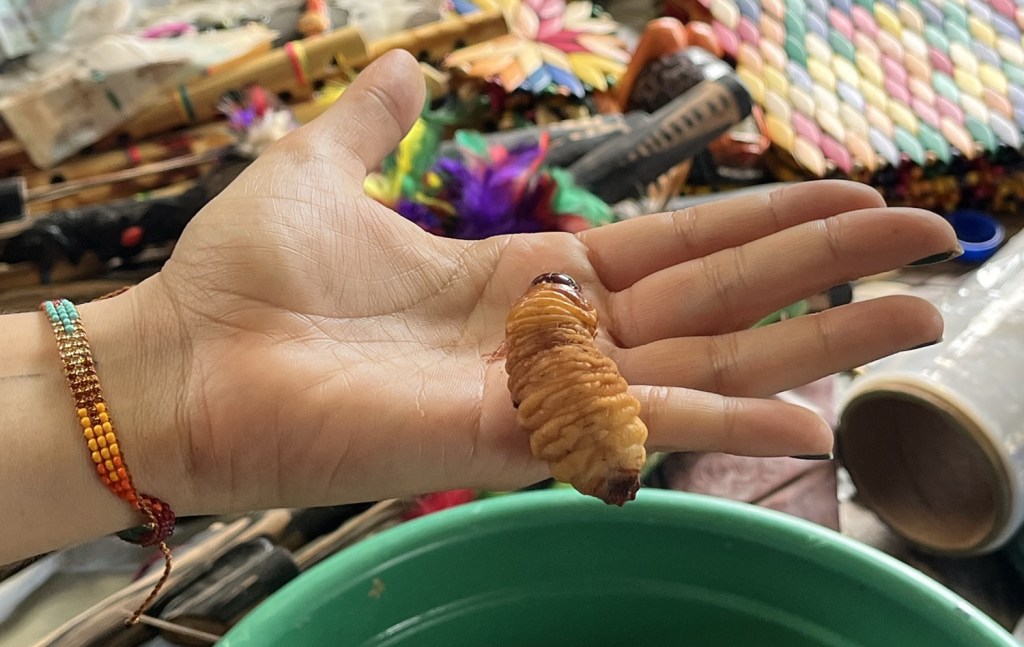
That same day, we were offered mojojoy: live palm worms considered a delicacy. Many tried them; I couldn’t. Just the sight was enough to know I’d regret it. Still, watching others embrace it showed me how much food, for them, is more than sustenance, it’s ritual and resilience.

La Isla de los Micos: A playful pause
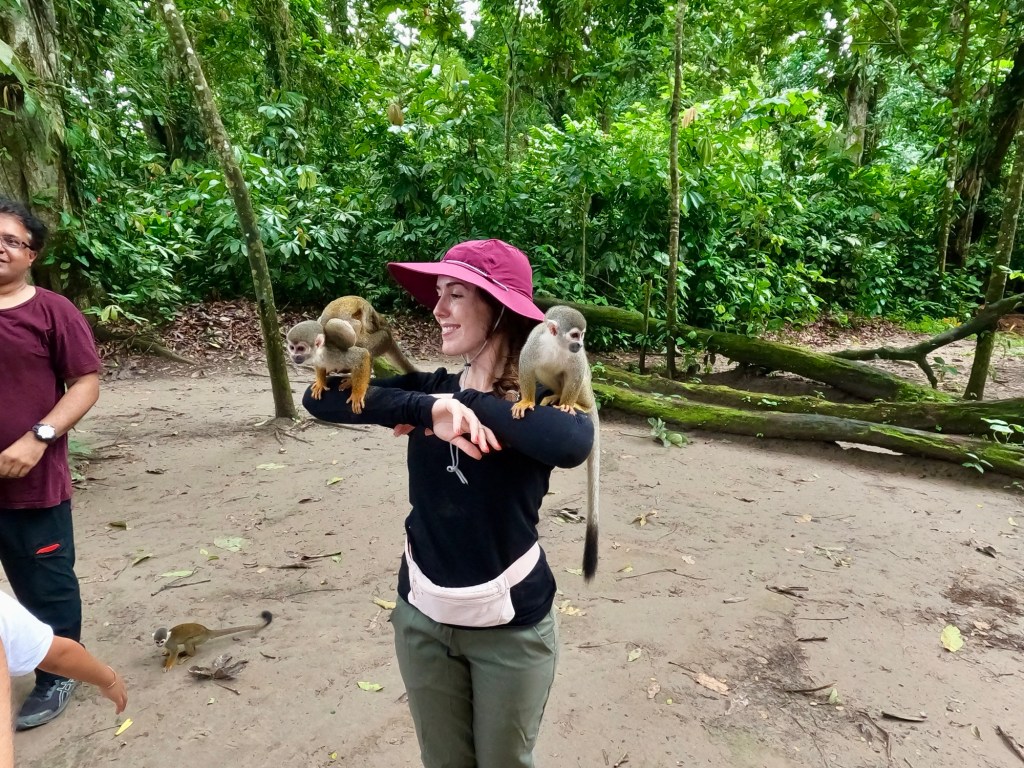
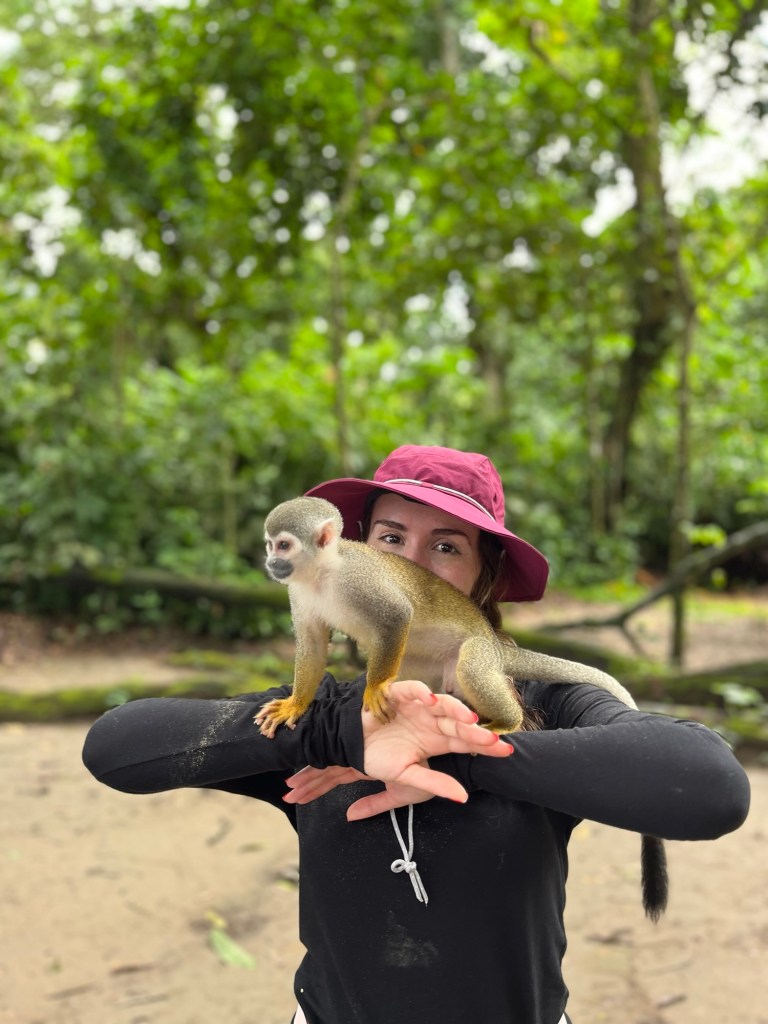
Another highlight of this trip was our visit to La Isla de los Micos (the Island of the Monkeys). From the moment we arrived, we were surrounded by curious, playful little micos jumping from branch to branch, and sometimes directly onto us. They knew we had food and weren’t shy about asking for it.
At first I wondered if they were being exploited, but I was relieved to see they looked healthy, active, and well cared for. They weren’t locked up or forced into tricks, just free to move, interact, and charm every visitor brave enough to let a monkey climb onto their shoulders.
It was lighthearted and fun, a reminder that the Amazon isn’t only about silence, wisdom, or ancient rituals, it’s also full of play, laughter, and unexpected joy.

Puerto Nariño: Rain, Lilies & Macaws
One of my favorite stops was Puerto Nariño. I fell in love instantly: peaceful streets, little cafés, surprisingly good ice cream.
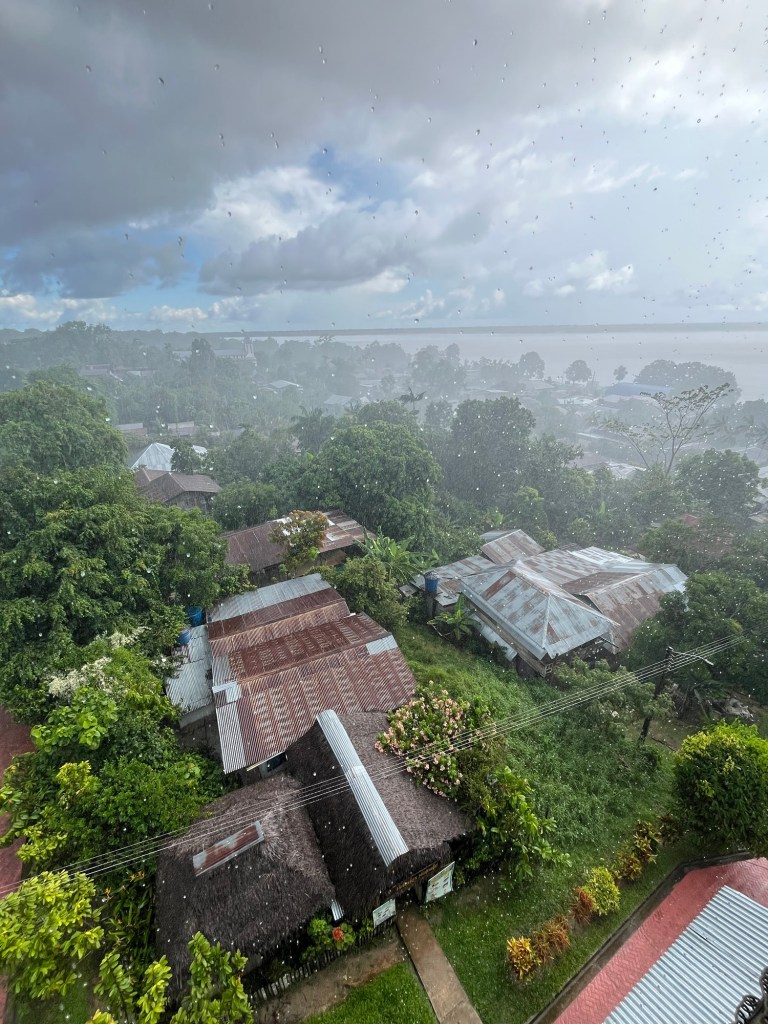
At the highest viewpoint in the town, we looked out over the river and the little houses when the skies suddenly opened. Not a drizzle, a full rainforest downpour. And it was wonderful. After the long climb in humid air, the cool rain felt like nature’s own air conditioning. We stood there smiling, soaked and happy.
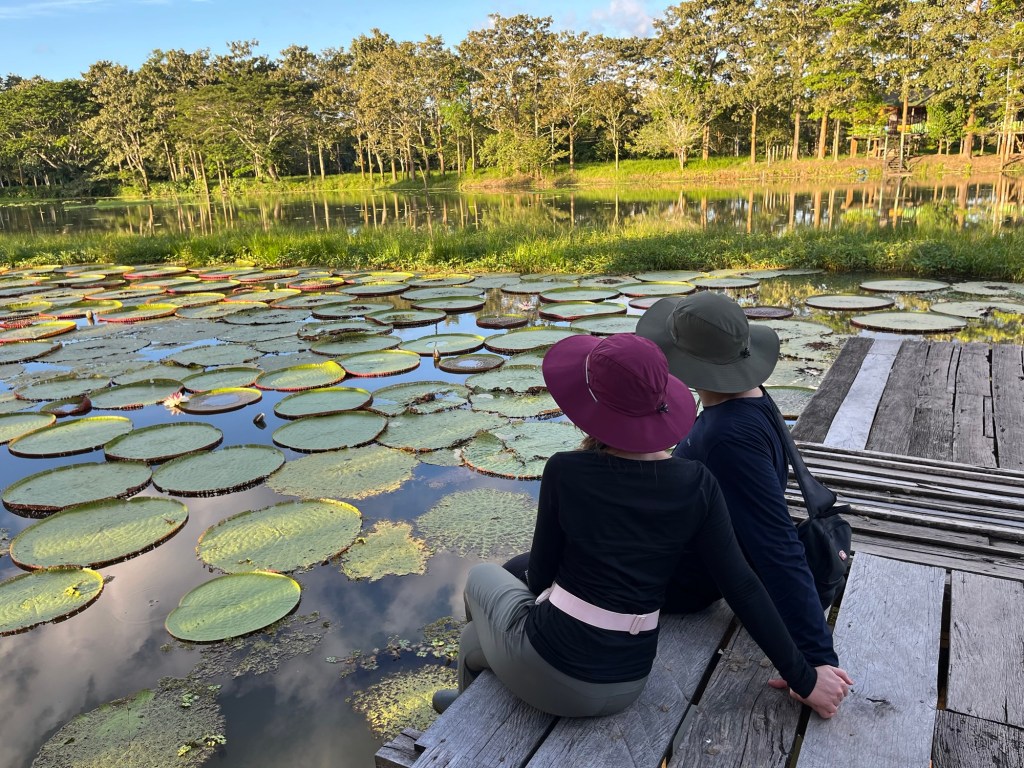
Later we visited the Reserva Natural Victoria Regia, where enormous water lilies floated like green plates, each cradling a delicate flower in the center. The name comes from a British explorer, though it has nothing to do with local languages. Still, standing among them, I understood why he was so awestruck.
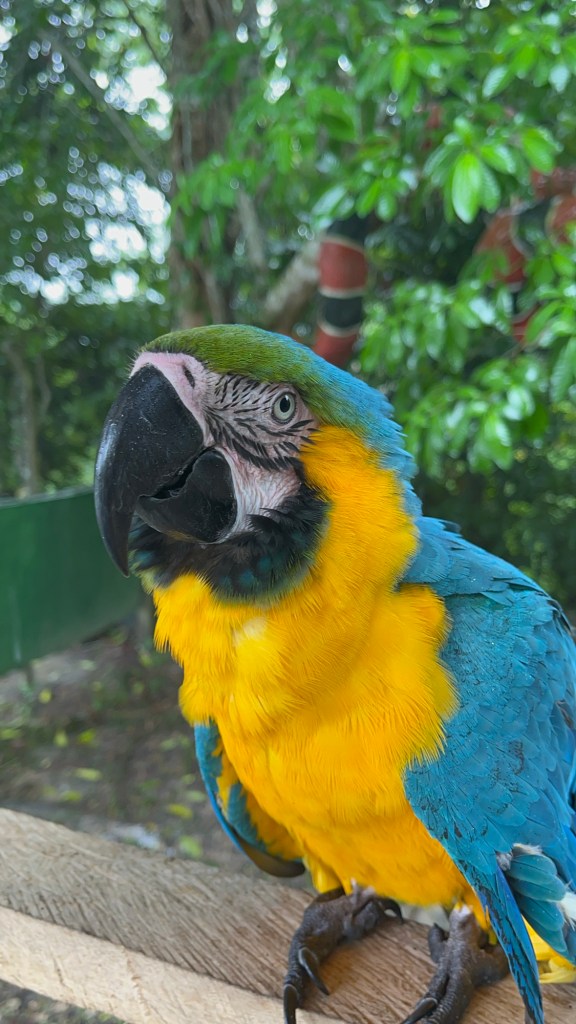
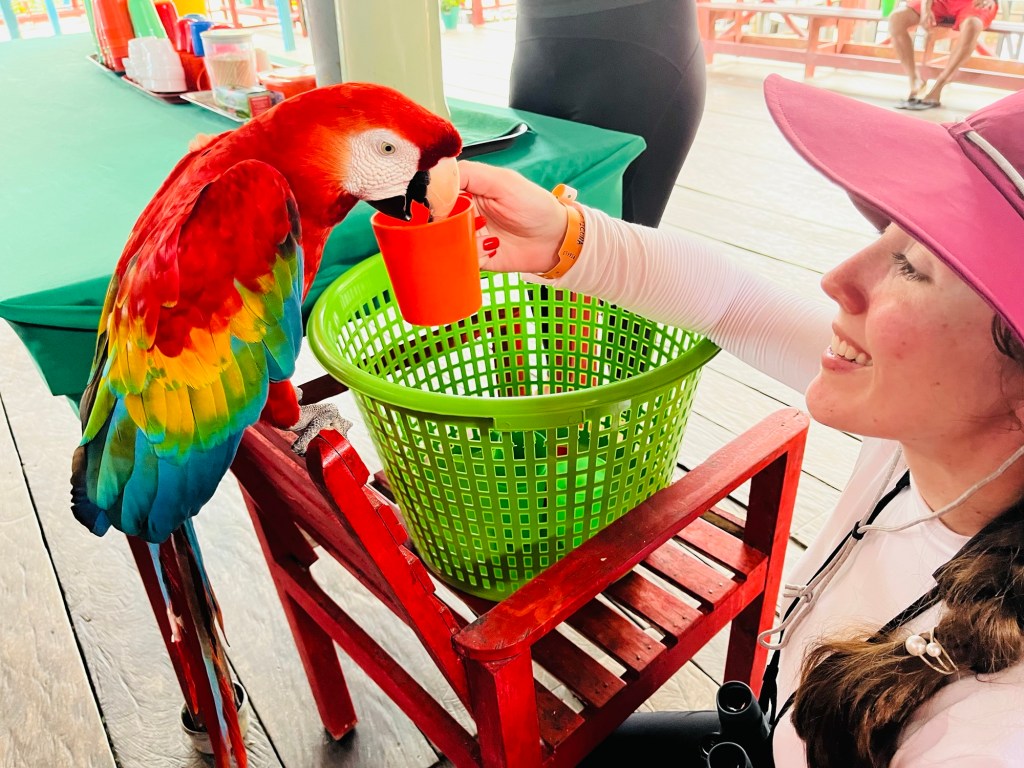
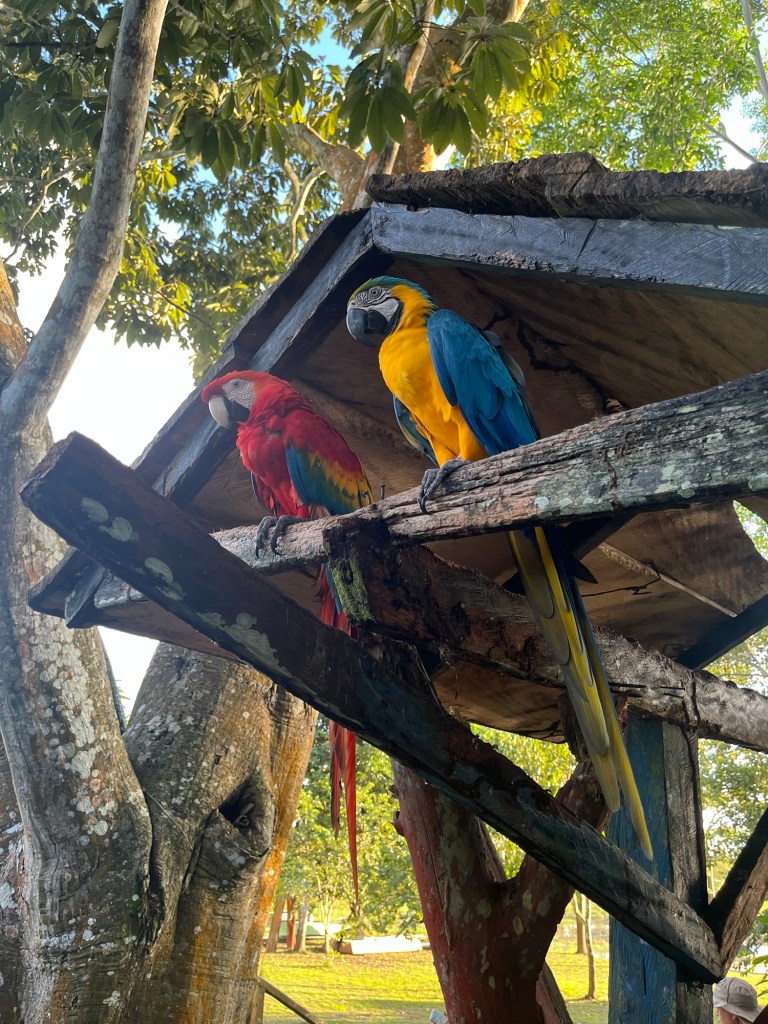
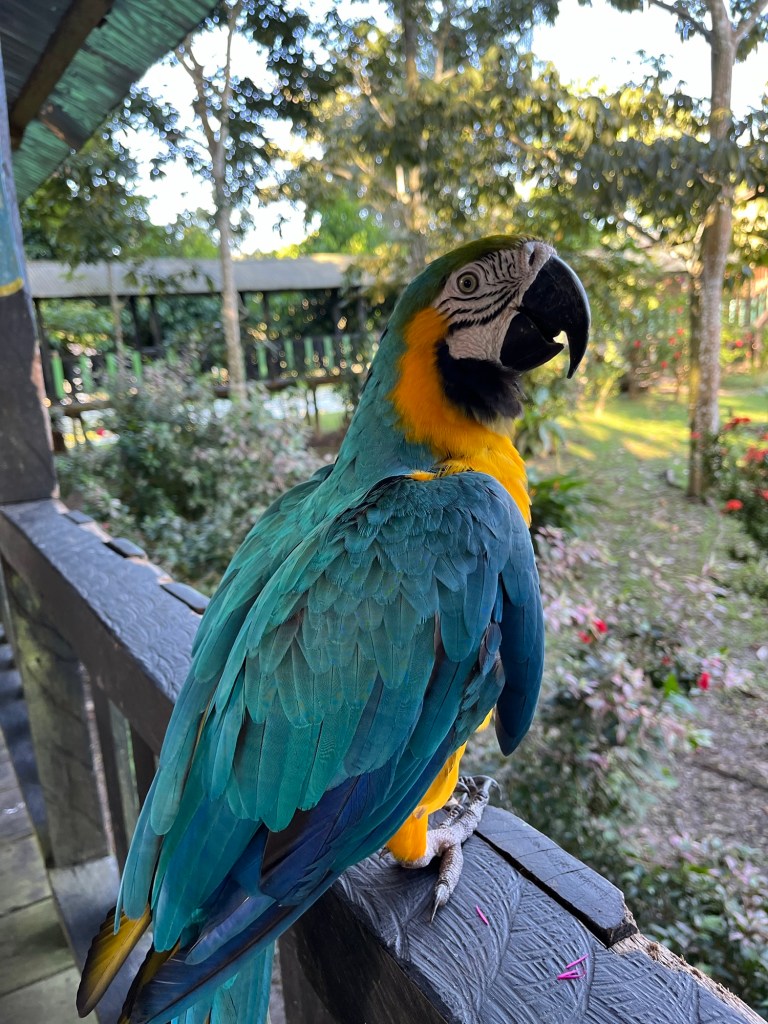
And the guacamayas, macaws painted in bright reds, blues, yellows, and greens. They were breathtaking against the jungle backdrop. Yet some had their wings clipped, unable to fly, and were always asking people for food or water. They were still beautiful, but in a place defined by freedom, their stillness felt bittersweet.
Reflections
We stayed at the Hotel Decameron in Leticia, the best in town, comfortable, but far from a five‑star resort. And that’s the point. The Amazon isn’t about luxury. It’s about letting the jungle surprise you.
From the mystical dolphin call to the healing plants, from ancient rituals to rainbow‑bright macaws, this trip reminded me that the Amazon isn’t just a place to visit. It’s a spell. A teacher.
The Amazon is the lungs of our planet.
Gracias, Madre Selva. Gracias, Madre Tierra. 🌿💚
 Random Lessons