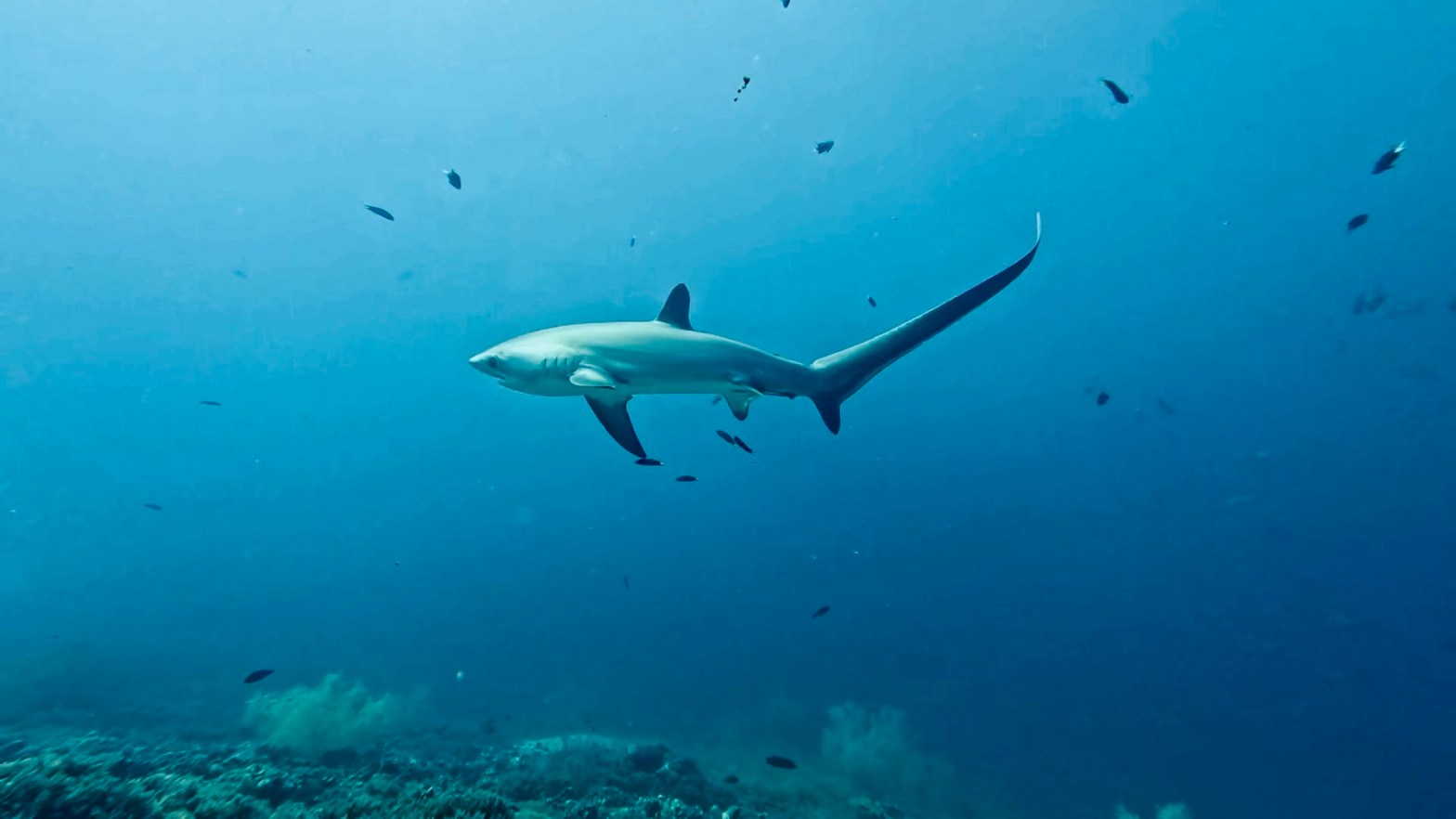
This post is about one of the most special diving experiences I’ve had, my encounter with thresher sharks in the Philippines.
The wake-up call was at 4AM on April 7th. It was dark, but still warm, the kind of tropical night that actually feels pleasant to be outside in. I got ready almost on autopilot, putting my gear together without overthinking it, just aware that this was the dive I had been looking forward to the most.
The boat ride out had a completely different energy from what I expected. Everyone was awake, talking loudly, laughing, already in a good mood. It didn’t feel like an early start at all. It felt like anticipation had taken over the sleepiness. By the time we reached the site, the ride ended with the sunrise slowly coming up, lighting the horizon in soft gold. It felt like everything was aligning for the dive.

We jumped into the water just as the light started filtering through. The descent was slow and calm. At first, it was just particles in the water catching the light, and then that faded as we reached the bottom and settled near the cleaning station. We stayed low, careful with our buoyancy, and then we just waited. Nothing at first. Just blue water and that quiet stillness where you’re aware that something might happen, but you don’t know when.
What makes this dive unique is exactly that spot. At Kimud Shoal, like a few other sites around Malapascua, there are cleaning stations where thresher sharks regularly come in from deeper water. These are specific areas on the reef where small fish clean parasites off larger animals. The sharks slow down, hold their position, and allow the process to happen. It’s a routine they rely on, and it only works if the reef is healthy enough to support those cleaner fish.
Malapascua is one of the very few places in the world where thresher sharks can be seen this consistently. They don’t live only here, but this is one of the rare places where they reliably come up to these shallow cleaning stations, which is what makes encounters like this possible.
And then, without warning, one appeared.
The first thresher shark didn’t make an entrance. It was just suddenly there, a shape in the distance moving toward us. As it got closer, the long tail stood out immediately. It looked almost unreal, like it didn’t quite belong to the rest of the body, but the way it moved made everything feel balanced and effortless.
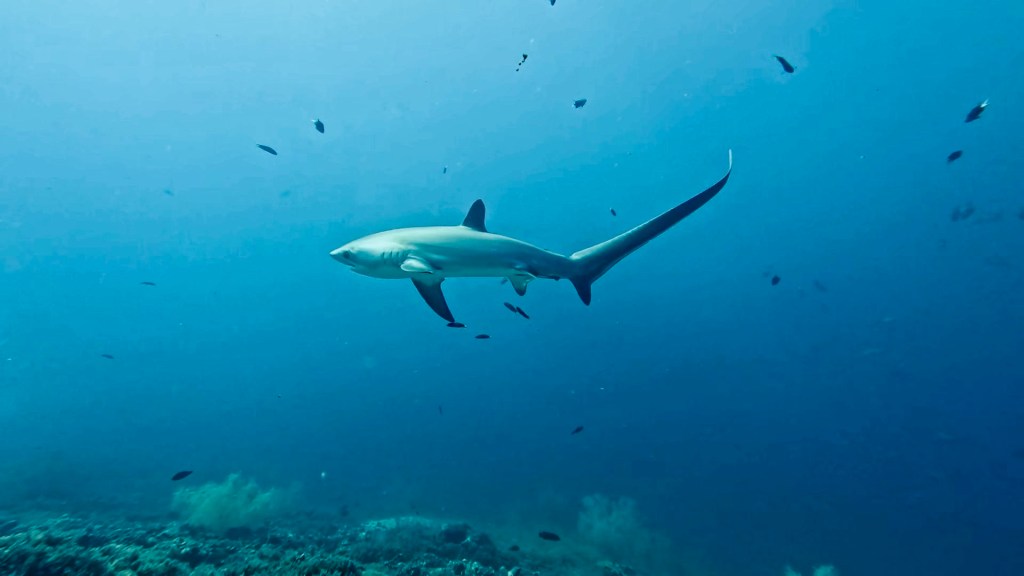
Then it disappeared into the blue, and another one came. And then another. Each one felt just as unreal, but never chaotic or overwhelming. It felt more like being allowed to witness something rather than trying to capture it. Keeping distance felt natural, like anything else would have disrupted the moment.
There was a brief moment where one of them was coming directly toward me, close enough that I could feel a small rush of adrenaline. It passed without changing pace, calm and completely in control, and just like that the feeling settled again.
Although I’m still an early intermediate diver, this dive will stay with me forever. Part of it was also because of the group. Everyone around me was respectful, controlled, and clearly aware of the environment. No one was chasing the sharks or getting too close, and that made the whole experience feel calmer and more genuine. At the same time, I couldn’t help noticing how many of us were there. Even when everyone behaves well, a larger group can still change the dynamic slightly. The cleaner fish are sensitive to movement and presence, and if there’s too much activity or too many divers clustered around, it can interrupt the cleaning or make the sharks keep their distance. It made me more aware of how delicate these interactions are, and how even small pressures can influence what’s happening.
The entire interaction depends on the reef. Coral creates the structure that supports the smaller fish, and those fish are what make the cleaning station possible. Without them, the sharks don’t come. It’s easy to overlook coral as just background, but it’s actually the reason this experience exists at all.
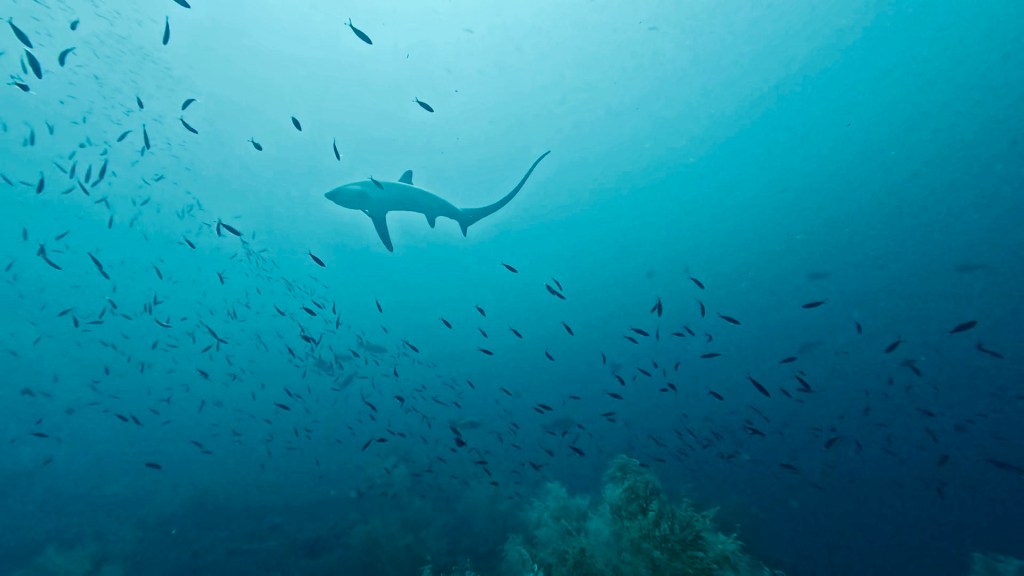
Damage doesn’t have to be dramatic to matter. A fin kick in the wrong place, poor buoyancy, even brief contact can affect coral that took years to grow. It’s not always visible in the moment, but it adds up. That dive made that connection very clear. The experience only exists because the environment is still intact.
As divers, it comes down to simple discipline. Good buoyancy, awareness of your position, keeping distance from wildlife, not chasing or trying to control the interaction. Choosing dive operators who respect these practices matters. None of it is complicated, but it has a direct impact on whether places like this remain what they are.
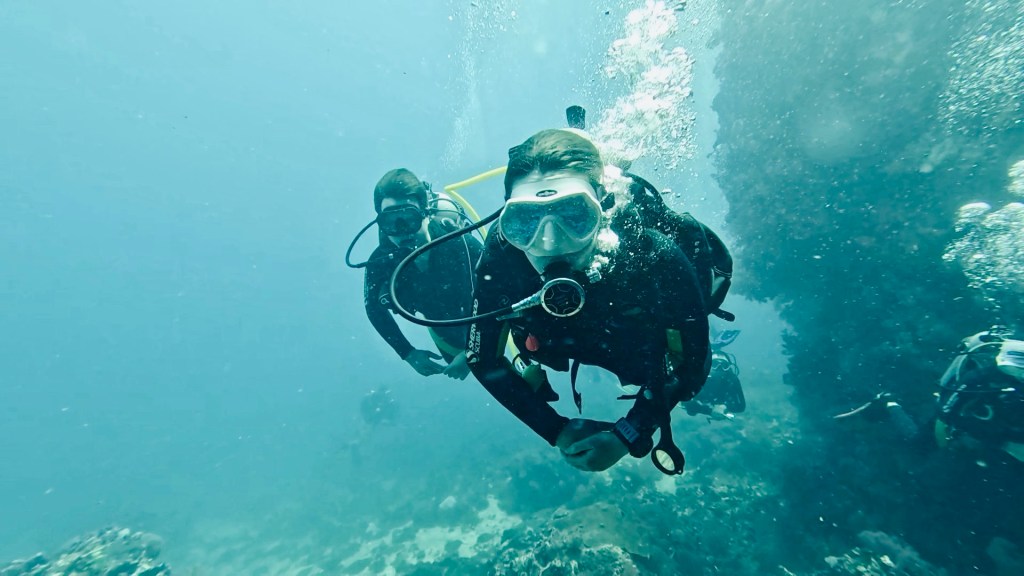
On the way back, everything looked completely different in full daylight, almost ordinary again. But the feeling stayed. Not as something intense, but something quieter. Just the awareness that what we saw isn’t guaranteed, and that being there, even briefly, comes with the responsibility to leave it exactly as it is.
With warm love from the Philippines 💙
 Random Lessons