The beggar and the xenophobe

On the Christmas eve morning in 2022, I landed in Budapest to spend the holiday season with my partner’s family. This Christmas was different. It was the first one we spent with his 84-year old lovely grandma post-Covid, and I wasn’t thinking as much as I used to in the gifts I would give, but rather on how much this gathering meant and how lucky we were to still be able to spend time with our loved ones.

At 11 AM, we found ourselves on our way to the Airbnb we rented, and we were starving. Almost every place to eat around the Buda castle, where we were staying, was already closed. This didn’t seem unusual for a 24th of December. End of the day, everyone was supposed to be having quality family time. Nevertheless, I couldn’t help to bring to memory for how many that relatively simple thing wouldn’t be possible anymore. It was also the first time my brother was going to go through Christmas without his father, a hard-working, generous man who Covid suddenly took away from us in December 2021.

After wandering a bit, we found a rather tourist-trap open-air Christmas market next to the Chain Bridge, where we bought a túrós rétes and a kolbász. Soon after we started eating, a wasted man came to us asking for money. «Usual homeless beggar, poor guy» I thought for myself. I couldn’t properly reply we didn’t have any money for him with my basic Hungarian, but my partner and a friend who picked us at the airport did. That man, who was supposed to leave after the negative, replied something that sticks with me until today: “I understand you don’t have money, but can we at least talk? It’s Christmas, and I’m alone and sad. 30 years living in this city, completely alone”. We were speechless. Not long after, one of the waiters came and threatened to beat him hard if he bothered any customer again. A long silence invaded our small open-air table, and I found myself feeling pity for that little wasted man I mistook for one homeless more. How many times have we seen chronic loneliness in disguise? In the drug addict, in the workaholic, in the compulsive shopper, in the big families, all chasing damaging habits to beat loneliness, which seems unbeatable. What can we possibly offer to our significant others to alleviate that burden and what can they possibly ask us? An eye-opening reflection hit me at that moment: not all things that count can be counted, not even for the poorest, not even with the biggest handout. It still beats me how we can start being part of the fight against loneliness, a silent and powerful enemy of our humanity.

We continued to eat with apparent normality, but I was visibly affected by this incident. I happened to be missing the rest of my family on this day, so I couldn’t help to feel empathetic with the 30-year-old lonely man. Not long after, a drunk man apparently in his 70’s, who was walking by close to us, started shouting: “I hate this! There are no longer Hungarians in this city, only slanting eyes suckers!” as a caravan of Asian tourists approached the market where we were. I couldn’t help but wonder where the xenophobic outrage of this man in Christmas eve was coming from. Where he and his family victims of the communism era? Where they forced to separate from each other and give up their possessions? To what extent do Hungarians collectively feel neighbor countries took away from them in the past world wars? Ultimately, I wondered whether this man was also a lonely in disguise, looking to belong and bond, craving for company and camaraderie in a city that moved on, that now feels so strange.

A last reflection for all of us: when was the last time you spot loneliness in a friend, a relative, even yourself? While it’s completely normal to feel this way from time to time, let’s think together about how we can fight chronic, persistent loneliness around us. Small gestures can be game changers: smile, sit together for lunch, try to genuinely know the next lonely in disguise that crosses your path. You might make their day!


If you enjoyed this post don’t forget to like, follow, share and comment! Happy to hear from you via email at: airamgabriela17@gmail.com
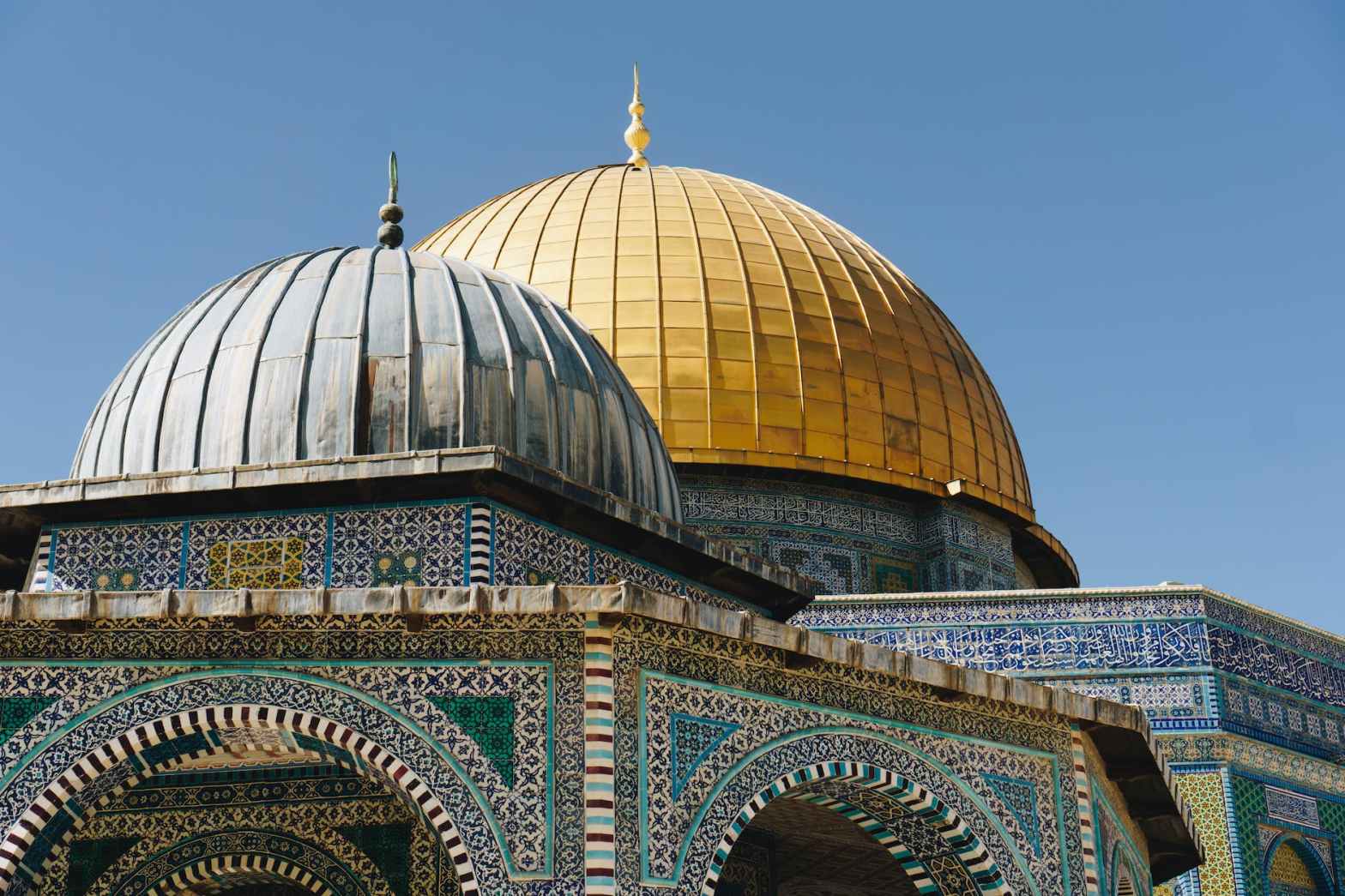
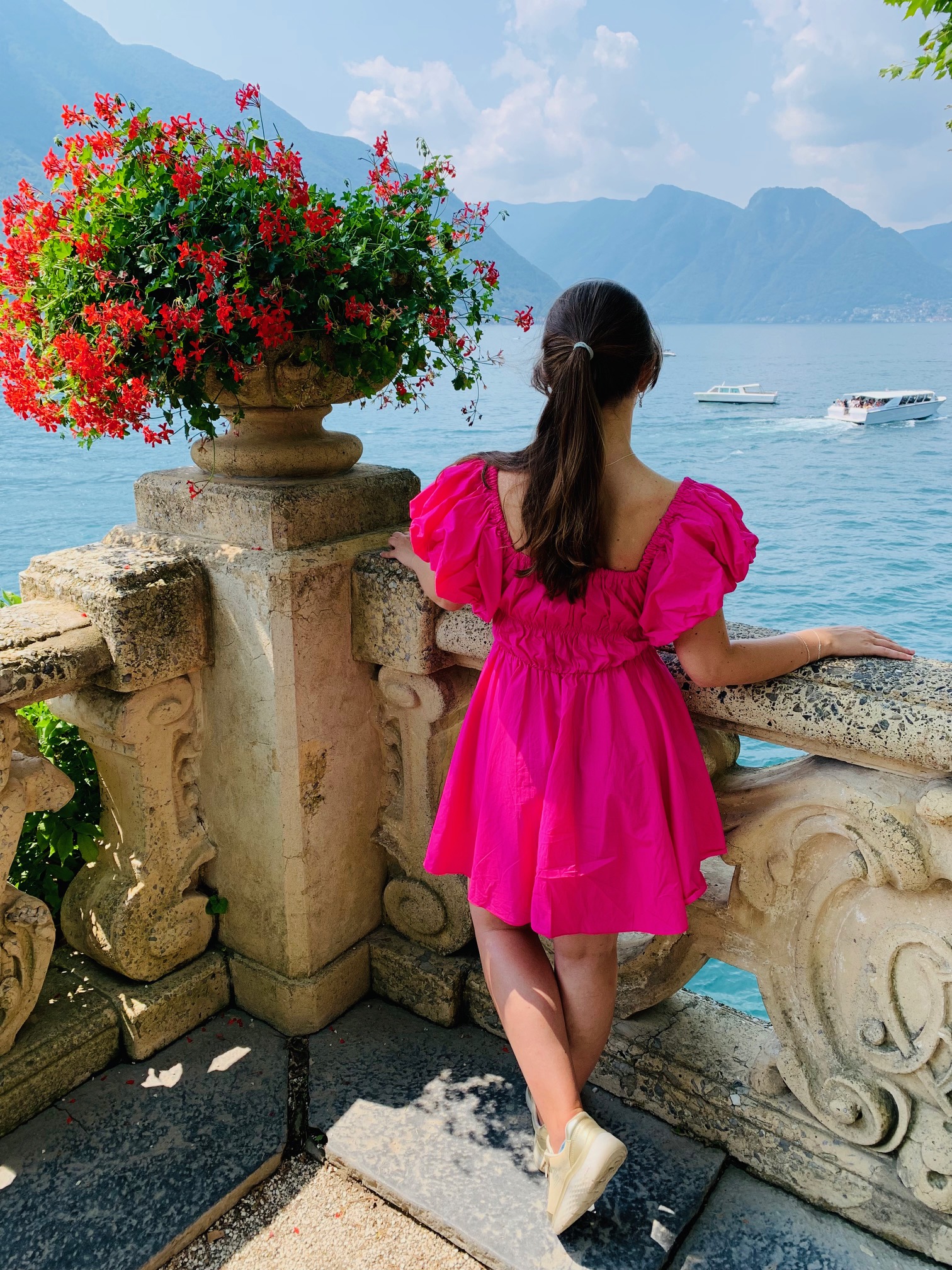
This is what happens when you wear a colorful dress in Jerusalem

Picture this: Sunny, clear day, +25 Celsius degrees, your favorite Italian summer fuchsia dress, while in Jerusalem… Not a great combination!

I’m guilty of loving dresses, but I swear I love pants too, especially sweatpants when I work from home. I live in Europe, which pretty much means I can’t wait to summer to wear my dresses, which are all stocked up in my closet for, what? +8 months a year?

Anyway, this story happened in 2022. I planned a journey to Israel to attend a wedding in Tel Aviv in late summer. As a enthusiast traveler, my first thought was to pay Jerusalem a visit due to its historical significance, although I’m clearly not a religious person, otherwise I probably wouldn’t be writing this post.

The wedding went great, lots of fun and good food, and Tel Aviv beaches were crystal clear. Of course, I enjoyed seeing firsthand all these sculpted bodies running and jogging around. Oh boy! Men and women there have glorious bodies. Kudos to all!

After 3 days in Tel Aviv, I continued my trip to Jerusalem. It was a hot day and it was the turn for my beloved Italian fuchsia dress, which I can barely use in London (where I live). I was more or less told that Jerusalem was a bit more conservative city than Tel Aviv, but I truly failed to understand to what extent this was the case, and more importantly, how my dress would put me on the spot there, like a sore thumb.

I took a train to Jerusalem, which was pretty much full of tourists. Nothing strange so far. Upon arrival 1 hour later, I noticed I had little time to make it to the Yad Vadshem memorial museum before it closed around 5pm, so I dropped my luggage at the hotel and ran to the closest tram station to go there.

Less than 2 minutes after, there was a time span when around half of the tram was staring at me without any intentions of not getting noticed. Most memorable reaction was from what looked like a high-school girl, who was looking at me with a mix of curiosity, surprise, and disgust at the same time. When our eyes met, she immediately looked away, opened the Torah on her hands, and started praying (I hope she’ll get to wear one of these dresses soon! Ideally without any guilt). What started as, I thought, a funny anecdote to remember later (it is today!), soon started to feel uncomfortable. Other men in the tram also stared at me intensively, with all sort of nuances. This was as unexpected as seeing everyone in there dressed in black! It really felt I was the only one not going to the funeral.

Despite not feeling welcomed during my tram journey, a few people in Jerusalem did quite the opposite and they even celebrated my dress. Two guys in a car even horned and shouted “Nice dress!”. Yay! Thank you for the support, whoever you are. End of the day, I managed to arrive sound and safe back to my hotel, where the folk who just started the front desk shift greeted me with: “Wow! Were you in a party? That’s an unusual dress” . I just smiled and explain to him what just happened.

Moral is, sometimes it looks like we live in a small world, but it’s for sure a pretty diverse one. A normal summer dress in Europe results strange, even offensive in Jerusalem. Whether the roots for this are sexism, a patriarchy legacy, or religious customs, if you find yourself visiting Jerusalem, consider that unspoken dress codes are everywhere in the city, and they go beyond the ones you would normally adjust to in religious places such as the Holy Sepulcher. The invitation is to always be yourself while traveling well-informed to avoid unwanted surprises. Happy travels!


If you enjoyed this post don’t forget to like, follow, share and comment! Happy to hear from you via email at: airamgabriela17@gmail.com
The toothless photographer

Have you ever entered a cafe where you didn’t have to pay to get free beverages and pictures taken? This is a story about a resourcefulness Bedouin who embraced technology like no other.

In the autumn of 2022, my partner and I visited the ancient city of Petra, a half-built, half-carved into the rock city built as early as in the 5th century BC that was the ancient capital of the Nabatean Kingdom. Petra was an important trade center for all sorts of goods, textiles, ivory, and spices from Arabia, Asia, and Africa. Over time, trading grew, so did the city, until prevalent routes started to shift towards the north and the sea, which diminished gradually the city’s power as a trade center. With the massive earthquake that took place in 363 AD, Petra was partially destroyed together with its great water-supply system, which left the city abandoned and lost over time. Petra was rediscovered in 1812 by the Swiss explorer John Lewis Burckhardt, and it has been home to nomadic tribes known as Bedouins since as far back as the 1500s. In 1985, Petra was declared a UNESCO World Heritage site, and in 2007 it was named one of the new seven wonders of the world.

The Bedouins are well-known by their hospitality. Before Petra was a popular touristic attraction, people from all over the world went there to stay for long periods of time. Canadians, New Zealanders found home in one of the many cave homes in Petra, stories well captured in books such as Married to a Bedouin and Living with Arabs: Nine Years with the Petra Bedouin. All of them sound so distant and impossible today, when Bedouins primarily live from tourism and learned how to monetize their tents.

I didn’t get to know the Petra of the 1970’s, nor did I stay in a cave for free for a month, but I visited this city in 2022 to still learn an important lesson about Bedouins and life: looks are deceitful, and Bedouins remain to be a resourcefulness as Nabateans were when they built a prosperous city amidst a mountainous desert. Probably only them can live and wander through Petra.

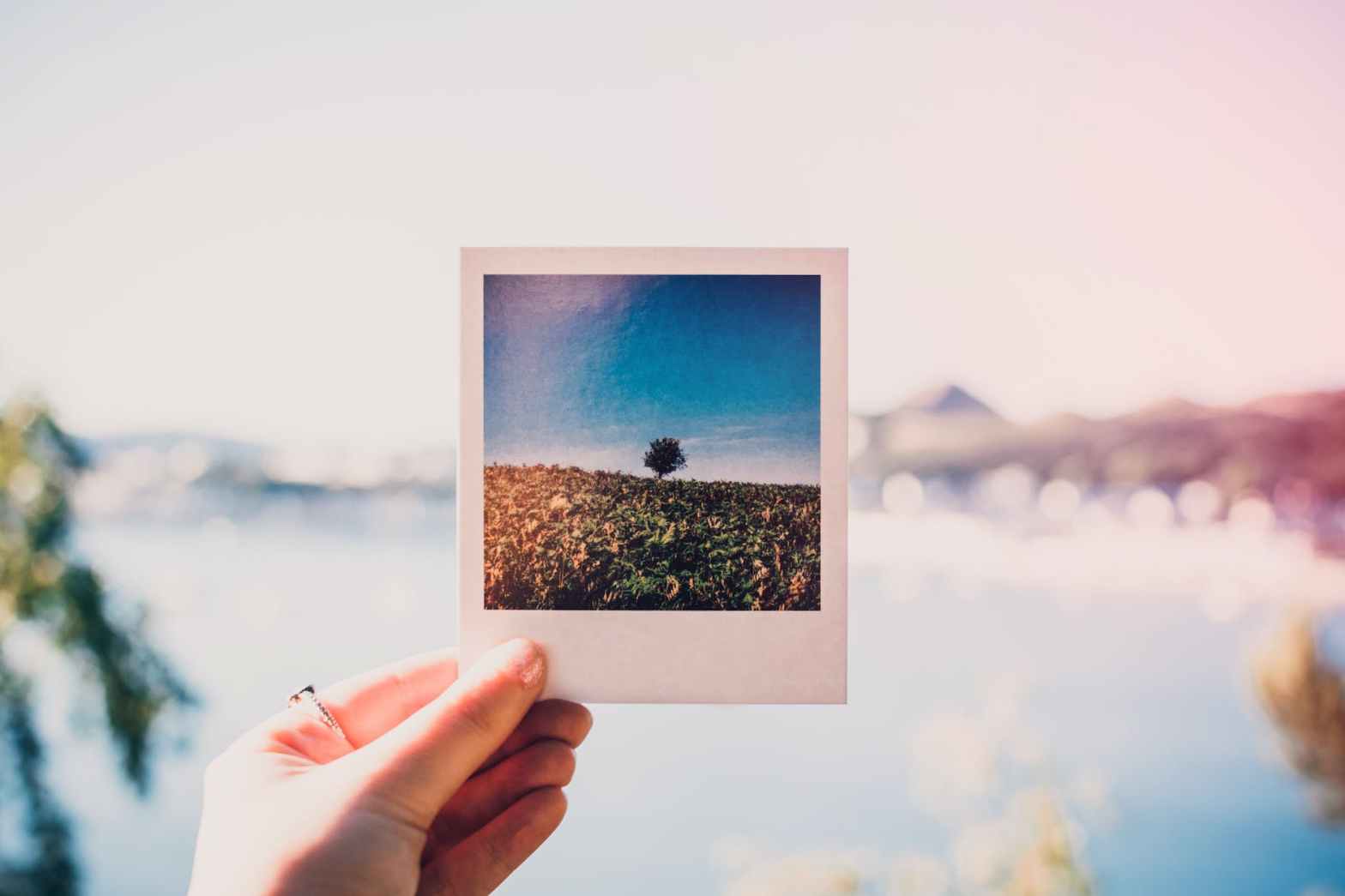
My partner and I had been hiking for over an hour in the heart of Petra city when we arrived at the top of a hill from where we were expecting to see the famous Treasury facade from an angle like no other. Even when touristy, Petra city remains intact and unadapted to ease tourism. It has no walking paths, so you have to hike around rocks and it can be a tiring experience.

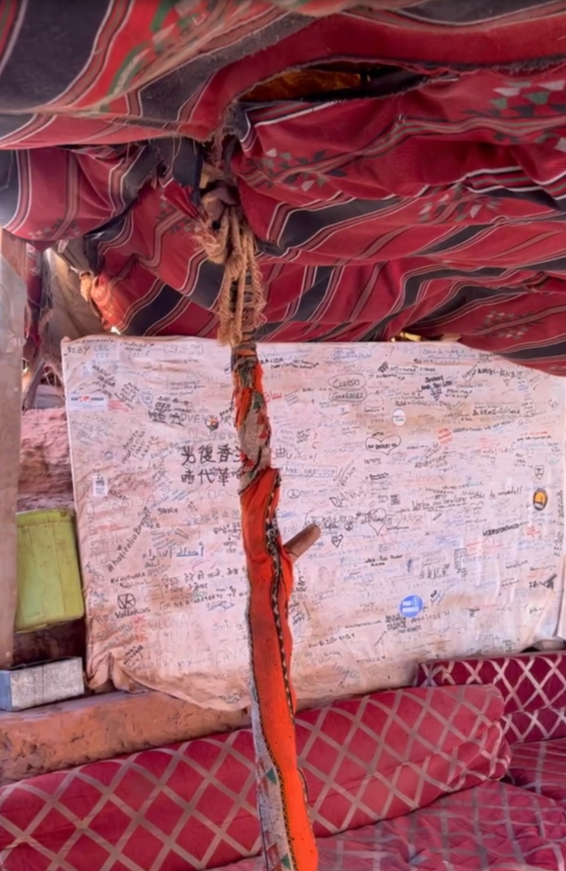
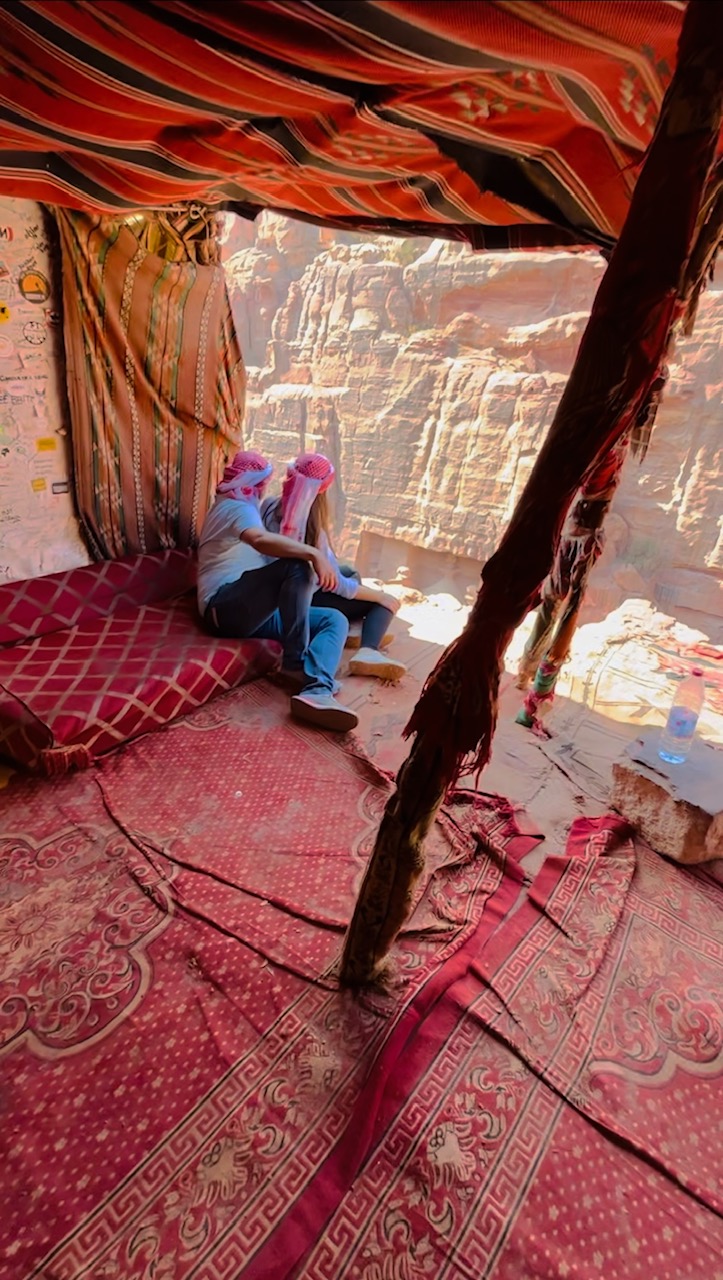
Once we reached the top, we saw a small tent with a hand-written welcome message in the entrance reading “Welcome to the place with the best view of Petra“. The tent was built inside a cave and it consisted of four large Bedouin-style reddish carpets extended on the floor and a few large cushions to rest your back if needed. No chairs, no tables, no menus, no loo. I was amazed to think that was the closest I would experience to a Bedouin lifestyle, as it was away from the touristic trap tents closer to the Petra Archeological Park entrance. The kitchen was right away in front of everyone, and consisted of a big pot where the man who welcomed us was constantly making Bedouin tea, a combination of water, black tea, and lots of sugar.

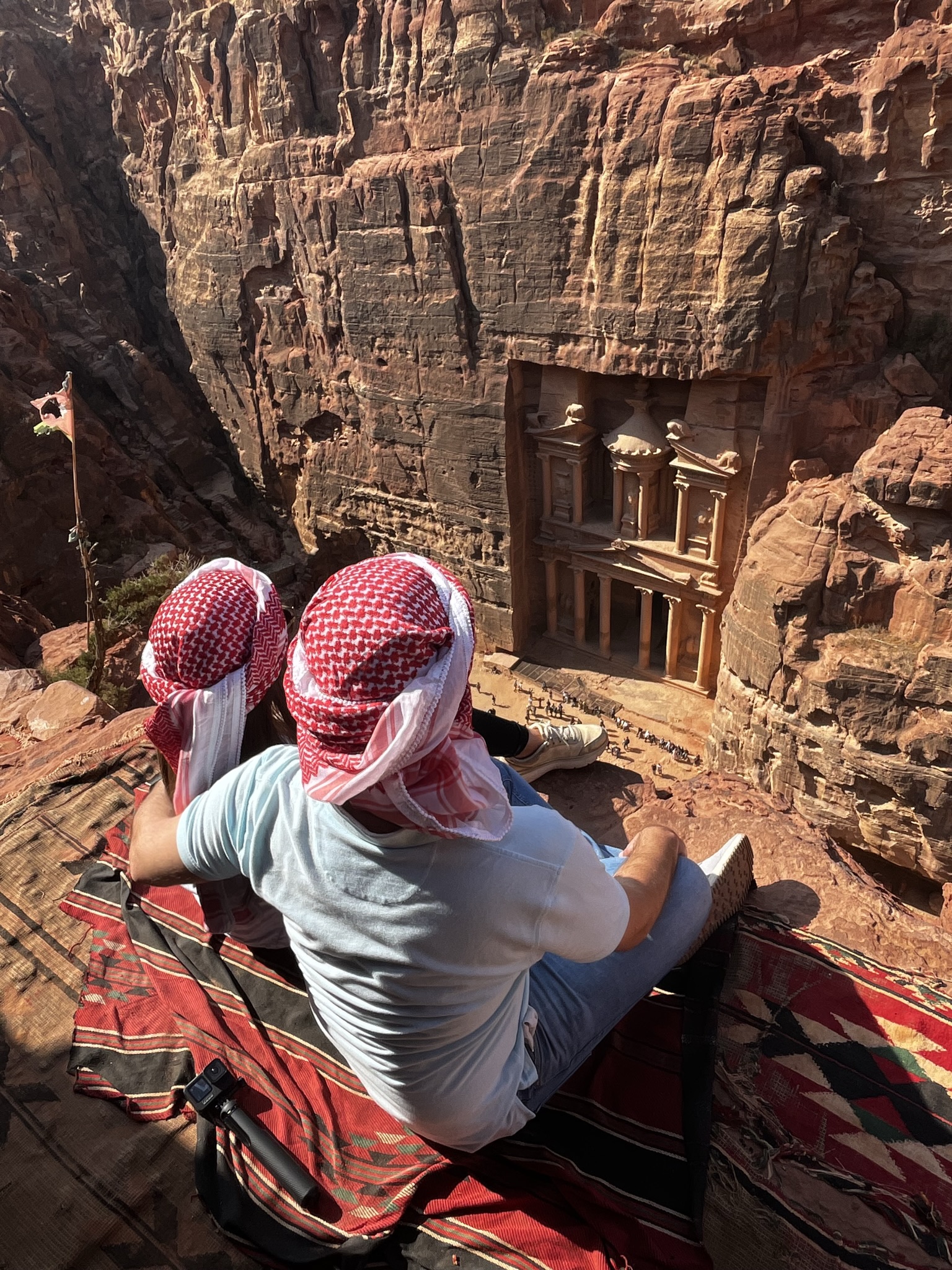
Unsure from where to sit, Muhammad, the man who welcomed us and we just went to the edge of the tent to see the famous Treasury. What an absolute breathtaking view! We took a few selfies, and decided to have some Bedouin tea. Over the tea, we learned Muhammad was the owner of the tent, which his father left him as inheritance. Muhammad climbed there everyday at 6 AM on his donkey, which looked well-cared and relaxed just outside the tent. This man dedicated every day of his life to serve tea and photograph tourists. He never worried about charging for the tea, the entrance to this strategically located cafe, or even upgrading his tent infrastructure. For over 25 years he had subsisted from tourists contributions and he claimed to be a happy man without ambitions of anything else. He sadly didn’t have even visible teeth left and his clothes were clearly overworn, but this was not troublesome whatsoever.

We, of course, paid for our teas. We chose the price, which was pretty much a tip and entirely voluntary, and decided to stay longer on the edge to contemplate the treasure further. We were the only ones in the tent for a while, thus it was difficult to estimate how much money this man could make in a day. When we paid him, he thanked us and immediately after he asked us for our phones, which was strange considering he didn’t even own one! What followed after was a 10 minute photography session with this man, leaving us incredible pics and, as I call them, influencer-style videos from the Treasury facade that we didn’t even know how to do! (I failed as an Instragrammer?) I couldn’t resist to ask this guy how he learned to master these photography skills, to which he just replied: “I understand what tourists want, and these photos will keep Petra close to their hearts“. I was just not expecting this toothless man to be such an expert and master my phone like a professional, and to date I wonder how much he could monetize his business to do more than survive! Yes, I have the capitalist chip so embedded.

It’s astonishing to see how technology has penetrated our societies all around the world. As we democratize access to the Internet and smartphones, social media and digital communication become survival tools for many isolated communities, being the Bedouins one of them. I like to think of Petra as the city that has been lost and found, and it’s ready to welcome the modern world in a different way. True Bedouins are not like the rest of us, they adapt easier, live happily with less, and experience freedom as its best. Every time I feel I’m overthinking a situation or witnessing myself want more, I just ask myself: what a Bedouin would do?

Want to meet another authentic Bedouin? Check this post from NatGeo. If you want to support Muhammad, visit Petra and ask for guidance to follow the path to the highest point from where you can see the Treasury. Curious to know how about your experience, so let me know in the comments!


If you enjoyed this post don’t forget to like, follow, share and comment! Happy to hear from you via email at: airamgabriela17@gmail.com
A Greek’s hidden gem

I always dreamed about Greece. Even before all those Instagram reels showcasing Greek sunsets in some picturesque island such as Santorini or Mykonos.

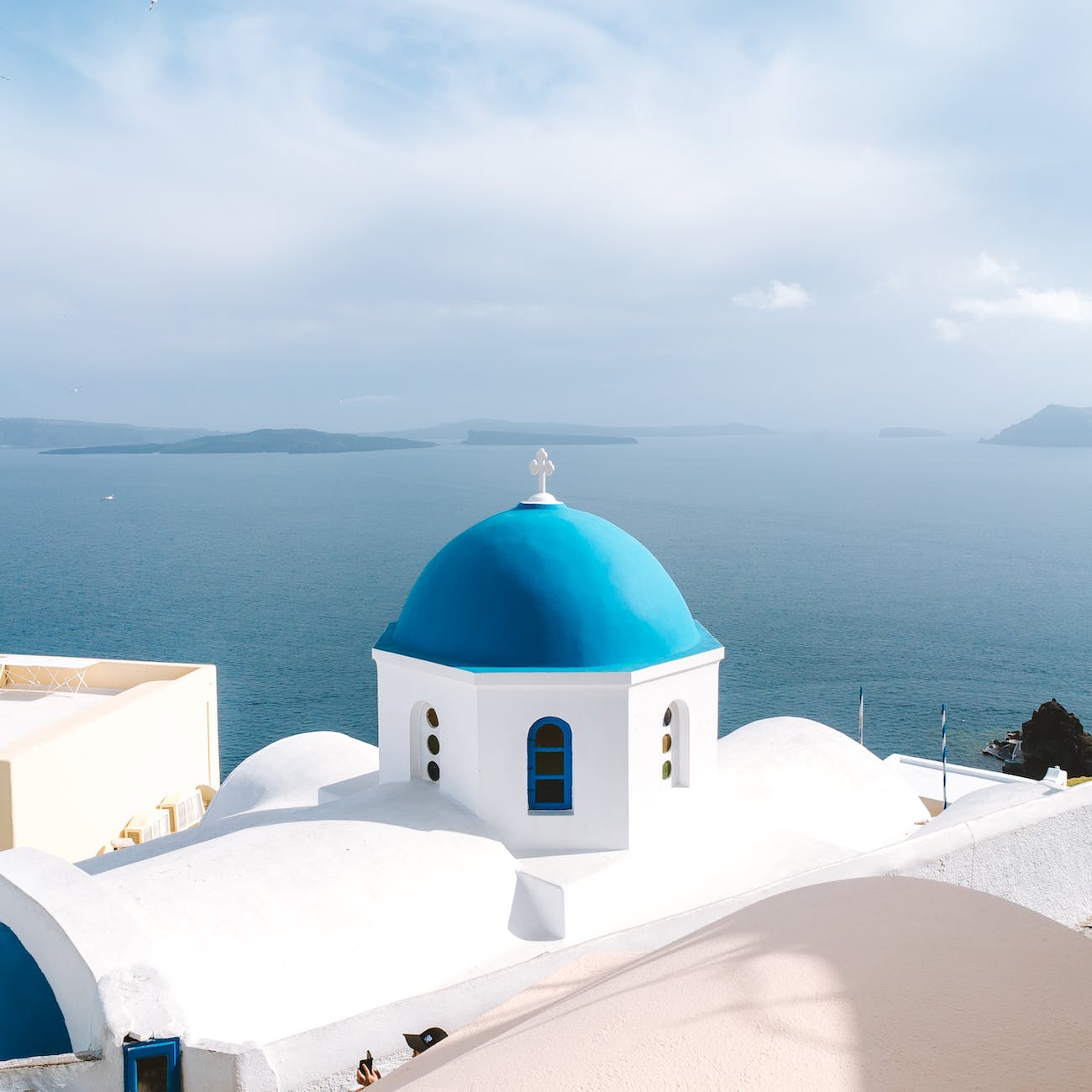
It started like an idea, details not fine. I was sure I wanted to visit the famous Greek acropolis in Athens, but that was pretty much it. Of course I ended up dreaming about all the famously touristic places, so Santorini was also in my bucket list. Who recommended? Instagram! Who else? No Greek would ever recommend you to go there.

I finally made my way to Greece in 2021, after Covid lockdowns eased. It felt like a one in a lifetime adventure after so many months of preclusion. I’m here to say I ended up with unforgettable memories from Greece, but particularly from a place that wasn’t even in my plans. If you,like me, want to see the best of Greece, allow yourself some time to go to one of the hidden gems this paradisiac country has. I promise you’ll forget about Santorini or Mykonos once there.

This place is a small island known as Koufounisia (Κουφονήσια, in Greek) and it was the most authentic place I visited in the entire country. When you’re there, you learn the greek way: calmness, relaxation, joyful souls and healthy, earthy delicious food. I don’t recommend it for nightlife though, but this is not what look for when I travel, so for me it was the real paradise. My recommendation is to stay in this magical place at least 2 days, but everyone knows this is not enough to disconnect and relax.

To arrive there, you need to take a ferry from wherever you are. You will likely be the only or one of the few tourists going there. You will not find big hotels there, and the ones you find are not from the typical chains. You will also find plenty of guest houses comfortable enough. In my case, the hotel owner went by himself to pick me up at the ferry station, in his own car. Heat was terrible that day and he explained he had to go several times to the station to pick up more guests. I asked whether he enjoyed doing that so repeatedly and he answered with a big fat smile: “Yes, I love my job and showing people around”.

Koufounisia has a tremendous gastronomic offer. Well, all Greece has, but this is a very special place because food can taste like authentically homemade even at restaurants. Plus, this is probably one of few places in Greece where you can still find great food for reasonable prices. Yes, Greece is not that cheap anymore. My personal recommendation would be to grab a mousaka at Laska.

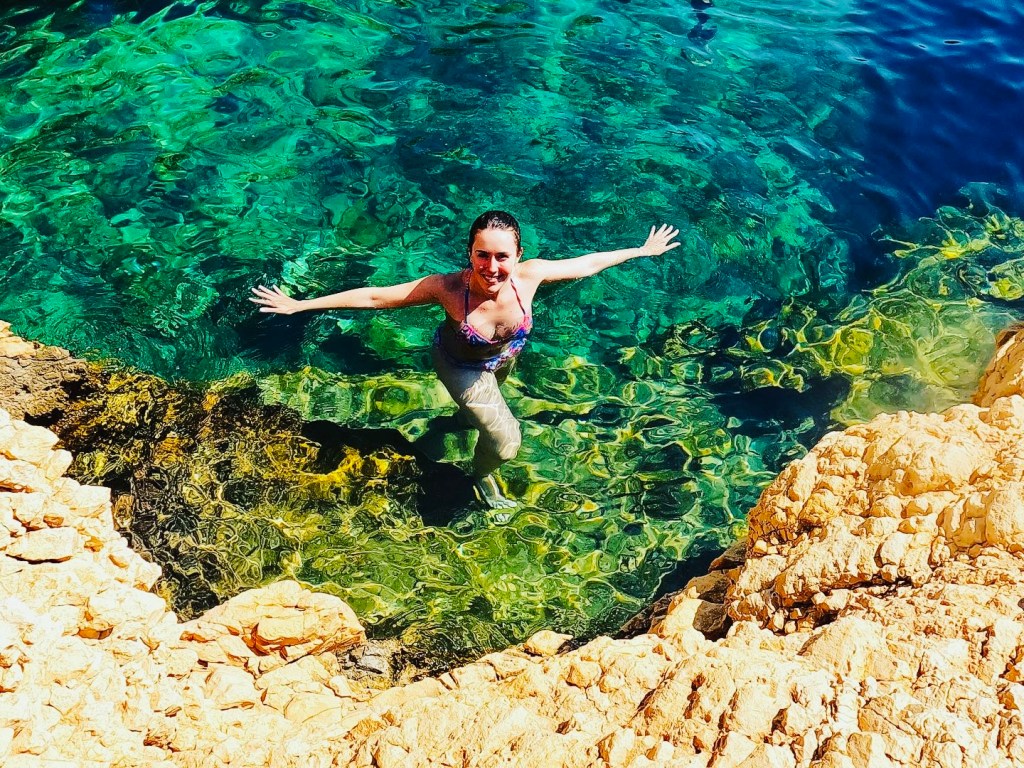
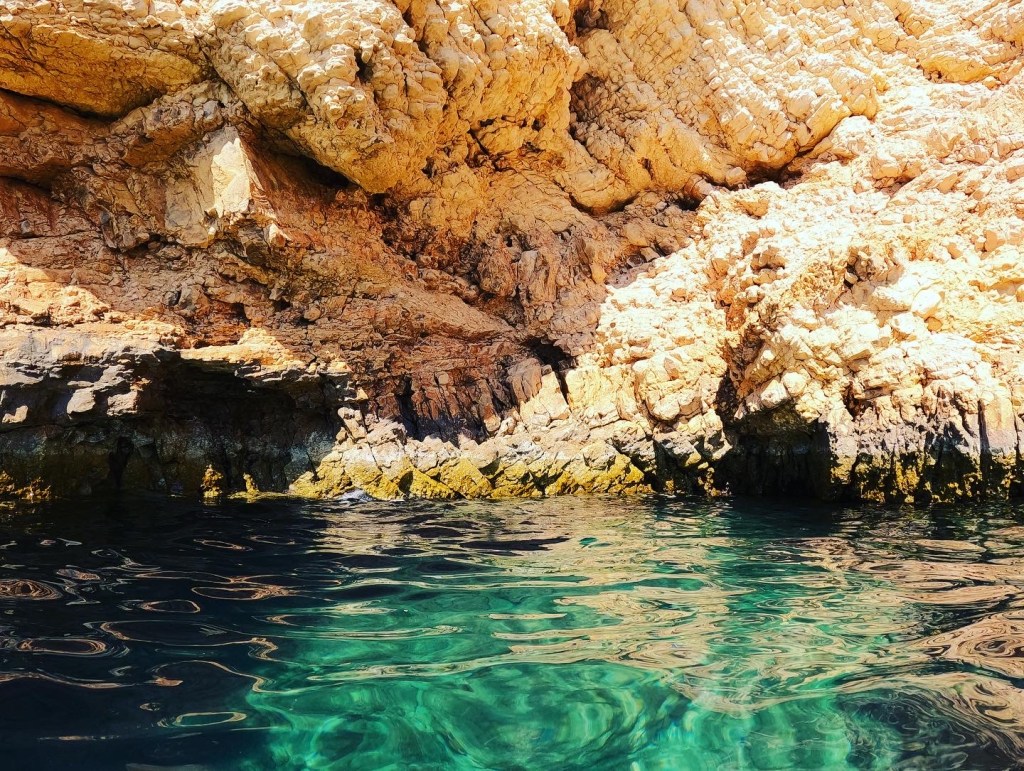
The best thing to do in Koufounisia is definitely going to the Devil’s Eye. This is crystal-clear turquoise and deep blue water natural pool you can only access from the top of it. Yes, you have to jump in there! I had the luck of being there completely by myself for about half an hour, and I was able to swim as free as I ever could. It just feels amazing To get there, you need to do a little bit of hiking (not steep though). You’ll walk for about one hour from Ammos Beach (close to the port), in direction to Inventure’s bay, and you can find the route in Google maps:

If you slow yourself some good company to go there, make sure they capture your joy with a pic 😊 Here’s mine:

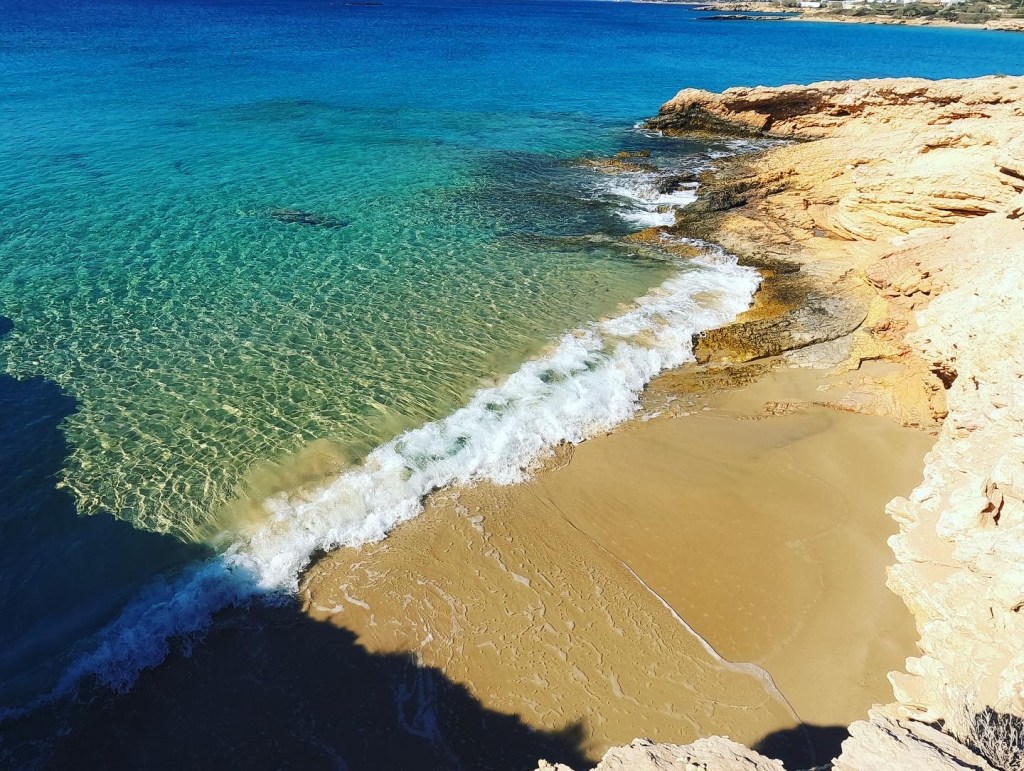
On a side note, Koufounisia also has spectacular sandy beaches, which are not that easy to find in Greece (I was a bit surprised by this, but most islands I visited were volcanic, for instance Santorini). Allow yourself some time to immerse in these beautiful beaches, free of touristic traps and crowds:

Koufounisia is, in Airbnb terms, a rare find. The vibes of this place transmit the best of the Greek lifestyle, its authenticity and genuine good service to visitors. For those wondering how I got to know about this place, I give the credits to one colleague at work who recommended it. Consider this place if you want to immerse yourself in the lovely hands of the Greek way of living, and I hope this remains a hidden gem, exclusive for the few of us reading this 😉

P.s. I will definitely come back. Let me know when you got your plans ready! 💜